„Heyday“ war ein ironisch gemeinter Albumtitel, Reaktion auf das Verdikt, das die Band nach „Remote Luxury“ traf: „Aw, they’re past their heyday.“ „Remote Luxury“ hatte zwei EPs aus dem Jahr 1984 zu einem für Church-Maßstäbe lediglich guten Album kompiliert, eine US-Tour endete finanziell im Minus, „The band was just drifting along in a sea of apathy“ (Kilbey). „Heyday“ war dann – genau das. Absolute Sternstunde, damals und für immer; Gold wert für Aljoscha in Rembrandtsommer und Poussinwinter.
„We’re still here, we’ve got the same ideals as when we started out, and we’re still aware there’s a special chemistry at work.“ (Marty Willson-Piper, 1986)
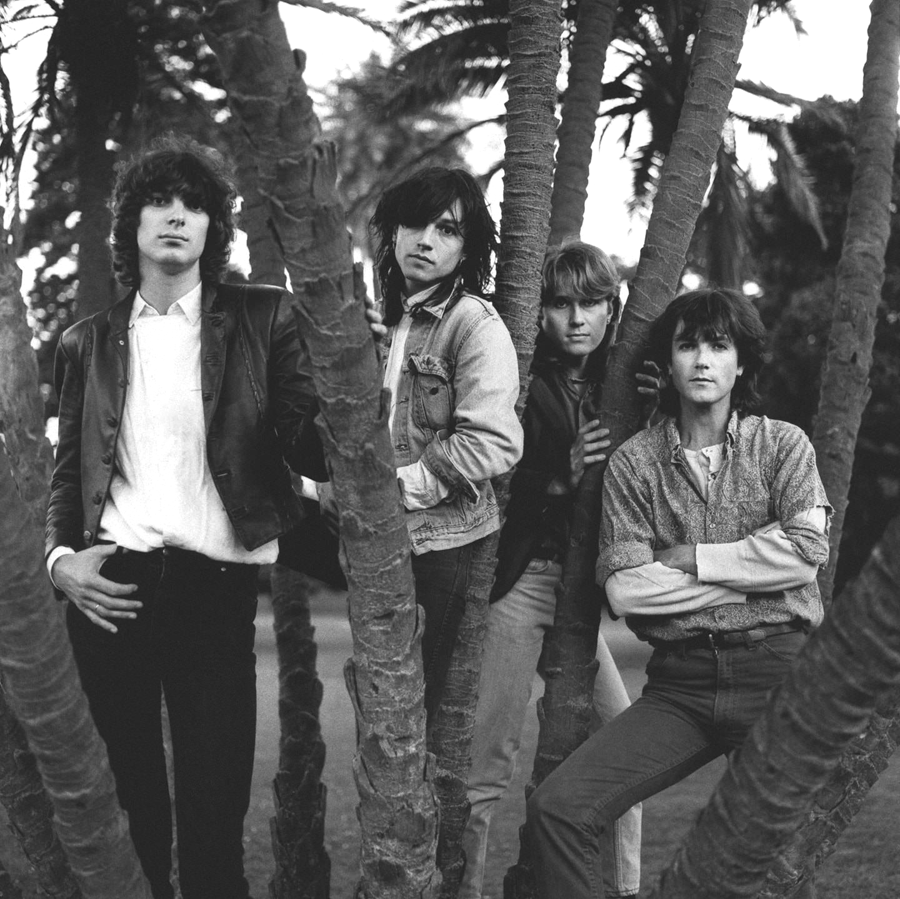
Marty Willson-Piper, „Heyday“ Liner Notes 2010:
„But, there was always some kind of built-in anti-success gene playing down our commercial side. We were notoriously difficult in interviews and Steve was cagey when it came to defining what The Church was actually about. (…) A magician is never asked how he does his trick.
I fell out with Steve one afternoon on tour in Hamburg and took the train back to Stockholm without playing the gig. [Am 10. Juli 1986. Willson-Piper war nach einer Woche wieder zurück in der Band].
‚Tantalized‘ was the second single. This song came out of a jam Peter and I had at the rehearsal studio when Richard and Steve were out of the room. Peter was behind the drum kit and I was slashing at chords like a mad person on my Rickenbacker 12 string then cruising into a frantic rhythm in the B-section before returning to the pattern that would be the verse. When the others came back we had this monster in there with us.“
God I’ve been asleep so long, I’ve been away
Back from software limbo the natives call today
I let their promises bind me
I let seductive logic blind me
I embraced a machine, went through the routine
I hid from the people who were trying to find me
Till the day comes when you realize
Otherwise you never care
Pandora’s box reveals a new surprise
Can’t wait to see your eyes, now you’ve been tantalized
For a hundred and one voluptuous days I broke the law
The labyrinth was closing so we panicked up a door
I let their wanton flesh obsess me
I felt their dreams and drugs assess me
I was hired and fired yet never inspired
Flattering, chattering words to impress me
All that glittered had me mesmerized
Otherwise I would have dared
Guess the nature of our enterprise
Can’t stop to sympathize, now you’ve been tantalized
I turned up in some harsh doomed city on another plane
I couldn’t believe the room I got or the guests I entertained
I felt the dirty streets surround me
I let the buzzing swarm confound me
I gave money to ghosts, I insulted my hosts
I could never get off the stuff that spellbound me
„The drums are so thick and natural on Heyday that they almost sound like they were recorded in a fairy tale forest. (…) For my part, the songs were wonderful opportunities for lots of electric 12 string guitar parts. Moreover, the interaction between the other stringed instruments, Peter’s guitar parts and Steve’s bass were nothing short of magical. Peter Walsh obviously understood the dynamic of the guitars, and the rich tones on Heyday showcased the intricate webs we weaved.“ (MWP, 2010)
Seaside town in winter, I’m trying to write my book
She’s broken down, it’s raining, I said I’d have a look
Uncurling human tragedy
Appropriately a mystery
She tells my story back to me
She said I’ll live this chapter till eternity
I let her go into the night
Night of light, satellite
Quite a sight to see
Oh oh what an ending baby, promise you’ll remember me
I’m not pretending baby, your sweet and wicked treachery
Water all my orchids, save my dynasty
I said I’m never, never coming back again
Never coming back again
“ … Heyday glows constant with startling colour and confidence“, schreibt Steven Cadbury [RAM, Australia, 02/1986]. Und Michael Morris [Juke, Australia, 01/1986]: „True, the inspired guitarwork and interplay with bass/drums provides a genuine excitement. But what draws the listener back time and time again is the yearning and vulnerable quality in the vocals, in such haunting tracks as ‚Myrrh‘ or ‚Tantalized‘. By definition, it’s spiritual music in the very best sense: it doesn’t always make sense except in the heart, which won’t ignore it. There might be a touch of confusion and venom in some of the lines, but it’s wit and charm strike beyond.“
„We’re interrupted by the telephone / You didn’t think they were invented then.“ Das Telefon klingelt in einer Zeit, in der es noch nicht erfunden ist: exemplarisch dafür, wie sich in Kilbeys Texten immer wieder Welten überlagern und durchdringen.
Aljoscha-Zeit: Spätsommer, zurück aus Florenz, „How can you be so invisible / Give me the nerves to see“.
Trotz begeisterter Reviews verkaufen sich die „Heyday“-Singles in Australien nur mäßig. EMI läßt The Church fallen. In den USA sind die Verkaufszahlen besser, und die Band beschließt, ihr nächstes Album dort aufzunehmen. Das US-Label Arista nimmt The Church für vier Alben unter Vertrag. Die Aufnahmesessions mit den Produzenten Waddy Wachtel und Greg Ladanyi geraten allerdings zur echten Herausforderung. Kilbey im neuen Jahrtausend über „Starfish“: „The biggie. The behemoth. The one to beat. Done with the geezers in LA. That’s called juxtaposition you guys. What a set of songs they had to work with though. We toughen up and lose some of the prettiness around the edges.“
Marty Willson-Piper, „Starfish“ Liner Notes, 2010:
„It was two worlds colliding – the West Coast scene’s obsession with perfection and smoothness and The Church’s predilection for jamming and psychedelia. We soon felt like the project was chained to a post, there was no chaos, nothing psychedelic and certainly no jamming. Richard in particular struggled to adhere to their strictness and when I listen to this record he sounds cautious.
We rehearsed the songs until they were perfect, like a gang of bank robbers going through the plan over and over again till there was no room for error.“
Steve Kilbey, 1988:
„Inspiration by its very definition means that you are unable to trace the source, I would have thought. It’s a bit like saying ‚what does something invisible look like?‘ Do you know what I mean? If it’s inspiration, you don’t know where it comes from.“
„I’ve just got this feeling that there is more going on than meets the eye. I think that song lyrics or ‚pop‘ songs should address these things more than they do.“
Marty Willson-Piper:
„The first track on the album was the cryptic, twisting ‚Destination‘, a good example of how far we had come in terms of writing as a band and the development of our sound. (…) The song takes you on a journey without moving, heading for a place you may not even be sure exists. (…) Arista released this song as a single. The light and shade of the arrangement, the builds from the verse into strident instrumental sections, the volume swells in the quiet choruses – great mood, great words, great guitars, great melody, great songwriting, bad single.“
Jemand auf YT: „Marty Willson-Piper’s guitar so transports this song into wondrous otherworldly places.“ Alle Gitarren, actually.
Our instruments have no way of measuring this feeling
Can never cut below the floor or penetrate the ceiling
In the space between our houses some bones have been discovered
But our procession lurches on as if we have recovered
Draconian winter, unforetold
One solar day, suddenly you’re old
Your little envelope just makes me feel cold
Makes destination start to unfold
Live im italienischen TV 1988. Kommentare:
My God this is one of the most intense performances. The guitar work by both Koppes and Wilson-Piper is just mind-bending! Emotive, powerful, timeless. I feel so grateful to have had The Church with me throughout my life. I would be a lesser man without their music.
Of all the Church stuff on YouTube, this probably comes the closest to capturing the magic of the guitar interplay of Peter and Marty.
Always such a mysterious band with mysterious songs – like this great one.
So raw and yet so dialed in. MWP and Peter are just so in sync here… Such a special band.
The Church = best damn guitars in the business. No one else even comes close.
Marty Willson-Piper 2010 über „Under The Milky Way“:
„My parts on the song were the 12 string acoustics. There are actually two rhythms played on different parts of the neck, one using a capo on the 5th fret, the other without a capo. The blend of the two make it hard to pick out the individual parts but the easy strum and evocative chord sequence introduce Steve’s naked yearning vocal perfectly.
Notice the second note on the bass – this is a powerful musical moment and helps contribute an unusual musical richness (…) Peter’s beautiful ethereal Wah-Wah electric guitar sends sparkling waves through the fragile shell of the song. A journey into something deeply philosophical ensues. There’s something about ‚Under The Milky Way‘ that takes you to another place, some timeless deep humanity that connects you to the stars, something that perfectly encapsulates you in the universe at peace in the great unknown, something that makes you close your eyes. We have lost count of how many times it has been covered. It’s a song that has its own life. It’s bigger than the band, a song that people who don’t even know the band, know.
We had no idea at the time of how this song would single-handedly write us into the history books and send us into the American singles charts.“
„Meanwhile, we were still struggling conceptually with the stiffness of the other songs. […] Interestingly we hadn’t really been willing or able to confront the issue of tempo within the band. Waddy came down on us like a ton of bricks about this and Richard was under constant attack. All this would lead to serious problems on the next album Gold Afternoon Fix that would change the shape of the band forever.
‚Reptile‘ was the highlight of Side Two and one of the most memorable tracks on the album. I wrote the riff in a rehearsal room somewhere in Sydney; it just fell out of my guitar like a diamond. Sometimes it just happens like that, but a riff is only as great as the song that follows it. It wasn’t just the lyrics and melody that made ‚Reptile‘ one of the great Church songs; everyone contributed their own crucial part. Sometimes a song can be mainly one person’s idea augmented by everyone else. Other times a song really is the sum of the parts working magically together. This was the case with ‚Reptile‘. Peter’s soaring guitar line, Richard’s intense hi-hat rhythm and Steve’s melodic bass line, acerbic lyrics and perfect melody brought this song to life.“
„Starfish“ erscheint im Februar 1988, und noch immer höre ich die Platte am liebsten aus kalter Winterluft kommend. Das Album katapultiert die Band auf eine neunmonatige Welttournee, Arista erhöht den Druck, man erwartet einen ähnlich erfolgreichen Nachfolger. Die Band hofft, mit John Paul Jones arbeiten zu können, die Idee wird jedoch abgelehnt, und so findet sich The Church Ende 1989 erneut in Los Angeles ein, um sich ein weiteres Mal in die kompetenten, aber kalten Hände von Waddy Wachtel zu begeben. Die Sessions dieser erzwungenen Liaison sind noch angespannter als die Aufnahmen für „Starfish“, und für Schlagzeuger Richard Ploog bedeutet dies das Ende der Reise.
Marty Willson-Piper, Liner Notes für „Gold Afternoon Fix“ 2011:
„By the end of the sessions Richard Ploog had only played on four songs and the absurd idea that a drum machine would compensate for Richard’s absence had been accepted. Consequently it was the most disappointing record the band ever made in terms of sound. (…) When I talk to people now I realise that a lot of the fans really did like it but unbeknown to them the problems were manifold. Richard had seemed to lose interest in the band, but it wasn’t just the music that was the issue. His relationship with Steve was fraught and he was on another life path […] Richard seemed to have forgotten he was the band’s drummer and with little encouragement from the production team he seemed resigned to the fact that he was not needed. […] Richard just did not have the discipline to carry on after the first few days‘ sessions. Waddy had eroded his confidence with his ferocity towards tempo, steady backing tracks and simplicity, showing less concern for excitement and spontaneous improvisation.
So Richard was sidelined. What happened next was perhaps the most stupid musical decision ever made on behalf of The Church. To overcome the problem of Richard playing the songs too fast, we were persuaded to use a drum machine.
But after we lost Richard we were sucked into the big machine, where we lost ourselves in glamorous photo sessions and expensive videos with faceless directors and a cast of thousands. Hollywood infiltrated our ranks. Our road crew was so large that we didn’t know all their names. Everything started to go wrong for us and culminated in two members leaving, waning sales, heavy drug addiction and no record deal.“
„Gold Afternoon Fix“ beginnt ominös mit „Pharaoh“, bleibt auf großartige Weise mysteriös und auf mysteriöse Weise großartig. Die Attraktion liegt gerade darin, wie die Band auch in einer Diktatur (Wachtel) ihrem eigenen Stern folgt. So klingt es, wenn The Church „Pop“ produzieren – futuristisch und doch zeitenschwer („a world passes by / with the sound of a young girl’s sigh“, „Transient“), metallisch kalt und doch romantisch, düster und doch zärtlich, melancholisch und doch strahlend schön wie Cinderellas Ankunft beim Ball. Vor allem aber viel zu weird, um jemals im Mainstream anzukommen. Kilbeys Zeitmaschine chromglänzend in der Asche stehend, grüne Schatten, ein ausgetrocknetes Meer, Traum von der Trapezkünstlerin in Metropolis. Mat Smith beschreibt im Melody Maker die Atmosphäre so:
„Gold Afternoon Fix is panoramic in its preoccupations – dreams and thunder, female universes – a sodium-toned Blade Runner landscape patented for their own backyard where the guitars no longer ring but brood, sounding an imaginary death knell for a worn out, silent planet.“
Und er spricht von „Steve Kilbey’s magnesium-eroded, despair-charred voice“. Magnesium-eroded. „And here, there’s lots of method in their madness, dear“, singt Kilbey in „City“, aber die Band infiltriert die Methodik der Produktionsbedingungen mit reichlich madness.
Willson-Piper 2011 über Kilbey: „Tethered, unable to break free to live out his stoner, sci-fi fantasy where elaborate and impossible worlds were inhabited by strange men and women and fantastic beasts that somehow spoke a language that we could all understand; a fantasy world that we could believe in. […] Which world should he be writing about – the world of reality or that of the imagination? The words seemed to jump back and forth between dimensions.
We had the songs, the imagination and the musical ability but no one seemed to quite know how to tap it, bottle it and sell it to the masses. Consequently we were doomed to be a cult band forever. A band you either loved or didn’t know. We were on the periphery of commercialism but equally too oblique to seduce the casual listener.“
Kilbey und Willson-Piper stehen später eher quer zu „Gold Afternoon Fix“, andere Bands würden an unheiligen Altären opfern, um nur einmal eine solche Platte zustandezubekommen.
„Terra Nova Cain, „with its lyrics that could be about alien seduction or just a kinky lover“ (The Morning Call, 1990).
She had unearthly eyes
She had a way of sifting through your mind
Like she’d done it to a million guys
She said, will you help with our research
I said, take me to your leader
She put her foot down on the oscillation pedal
She was a transdimensional speeder
Androidin / kinky lover in „her weightless bedroom“:
What is Russian Autumn Heart about?
„When I look at it, it’s probably a slightly anti materialism/pro aesthetic pursuit theme.When I was working in LA with Brix Smith, she was living in Sue Hoffs‘ brother’s guest house. His wife is Russian. She was reading one day in the back garden. She seemed incongruous in this warm sun-soaked Californian paradise setting. I made a comment to her about the book she was reading as I think it was something Russian that I’d read too.
She was so happy to discuss literature with somebody as she felt that people she had met never read ‚Great‘ novels where in Russia everybody with an education would gorge themselves on these works of art.“ – Marty Willson-Piper
„‚Fading Away‘ should have been great. It had a potentially captivating feel, the mood and the melody, a great chorus, some soaring guitar from Peter and me playing those three descending chords. Sonically unrealized again, there is magic in there somewhere but its hands are tied and it’s gagged and covered in polythene, kidnapped by the studio itself. The studio is a space ship and it’s the producer’s responsibility to navigate the stars and arrive at the right planet.“
Richtig aber falsch. Der Song ist alles, wovon Marty Willson-Piper glaubt, daß er es hätte sein können. „Fading Away“ ist my favourite auf „Gold Afternoon Fix“.
Don’t come to pieces in my hand
White stars reflecting dust and sand
That perfume makes me think of grief
Shake the faith, shake the belief
Who’s there to say that we’re living this moment
Feels like I’m in a play
The sets and the props of this, your apartment
Seem to be fading away, fading away
So I wander through these rooms
I feel the orbit of the moons
And I dream what I’ve become
And all’s forgotten by the sun
I understood before I knew
I realized I’d spend my life coming back to you
(„Laughing“)
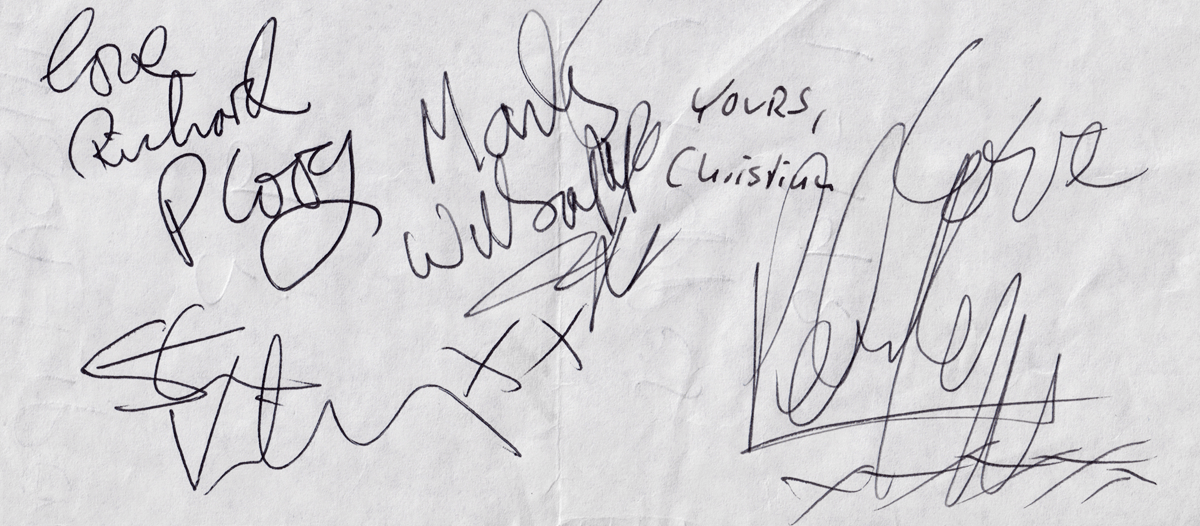
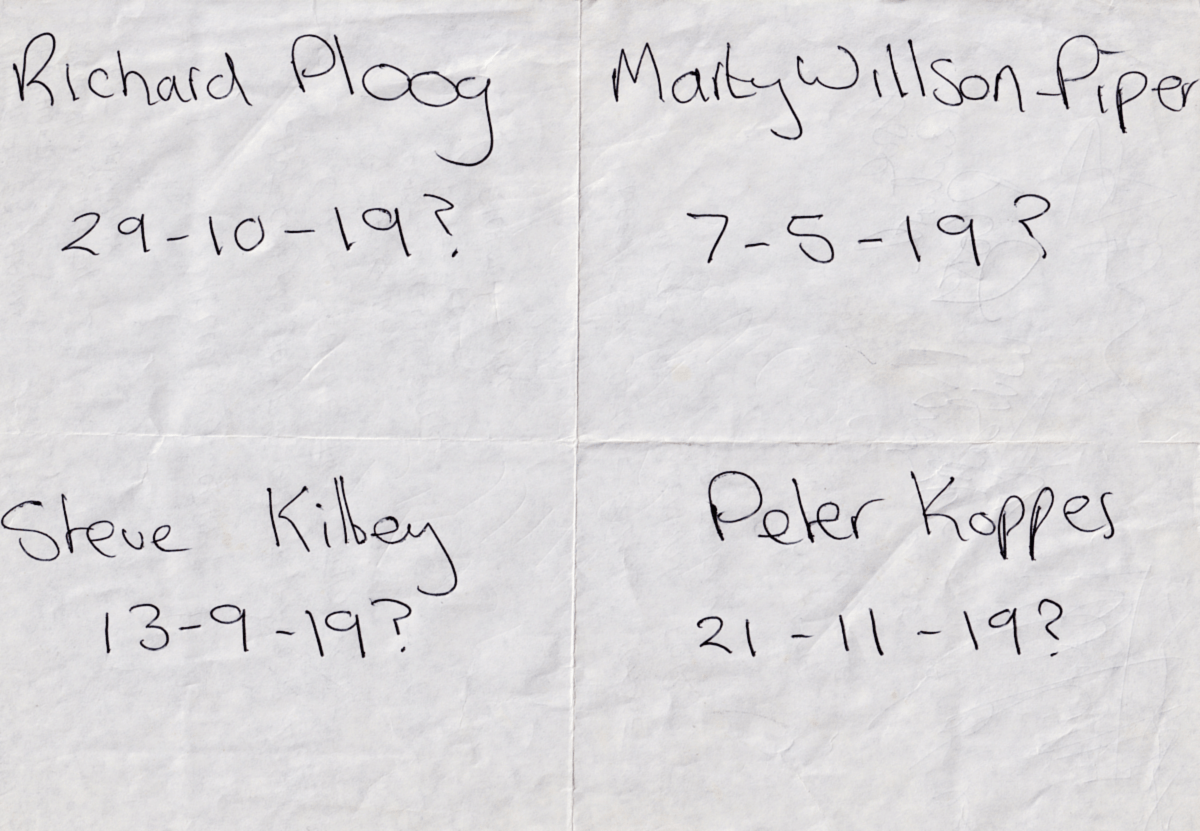
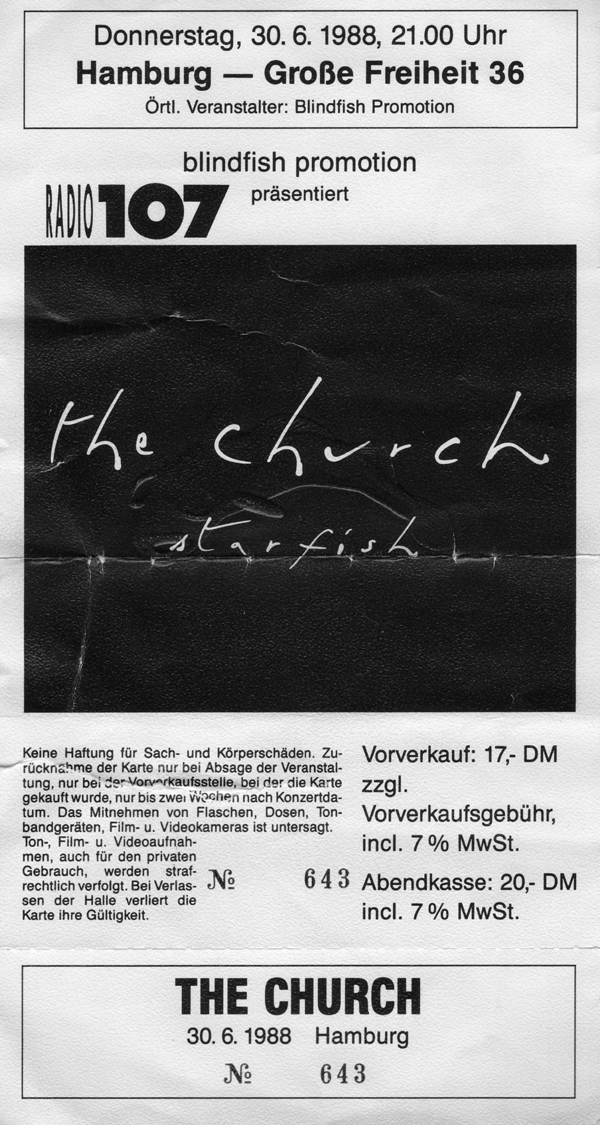
 Das Cabinet des Christian Erdmann