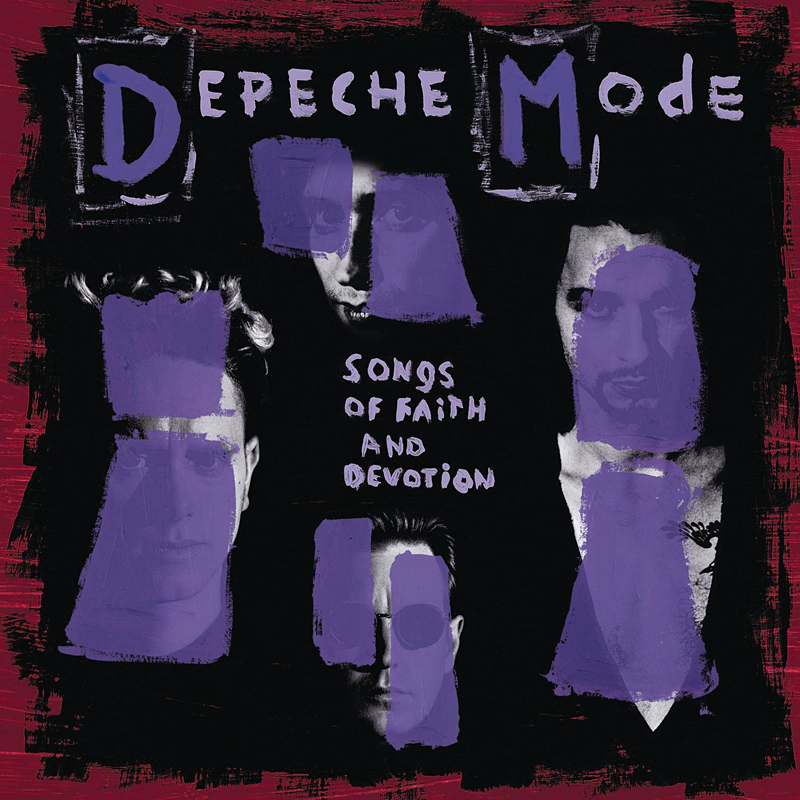
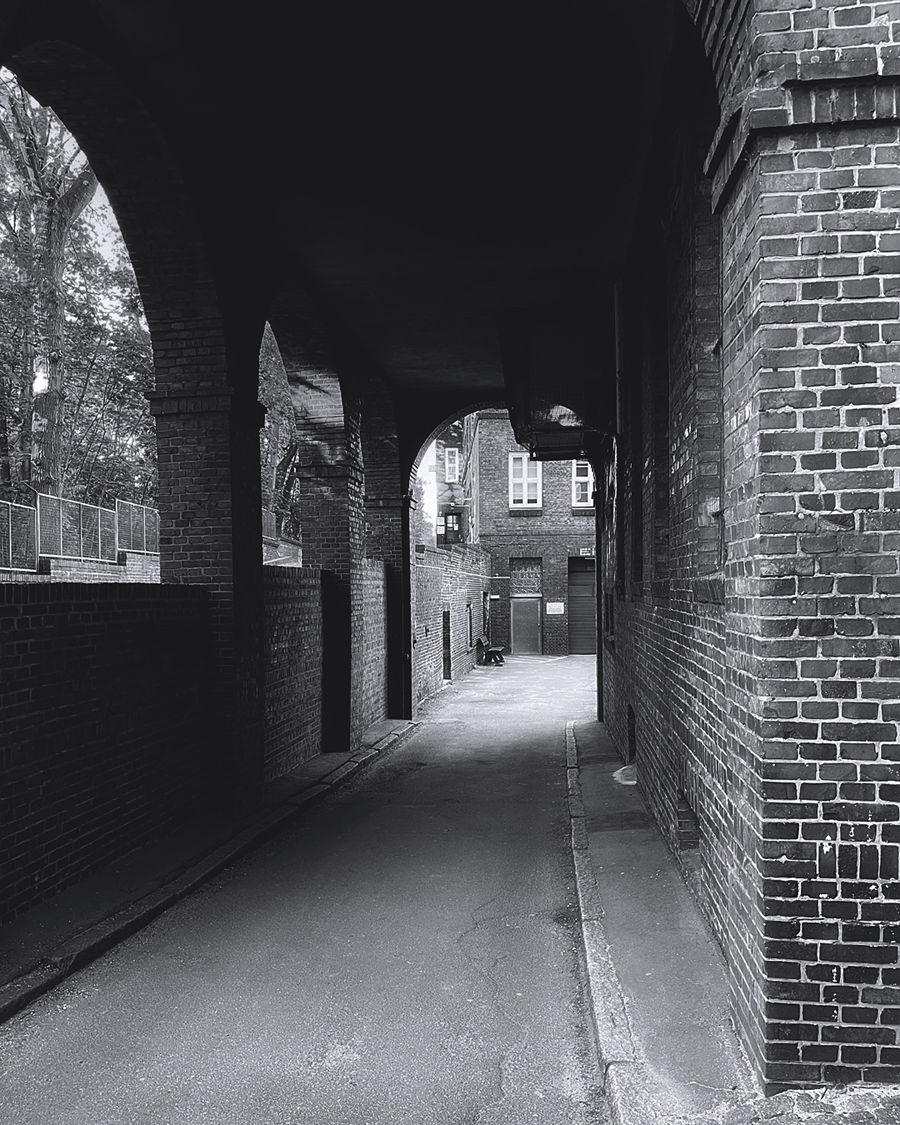
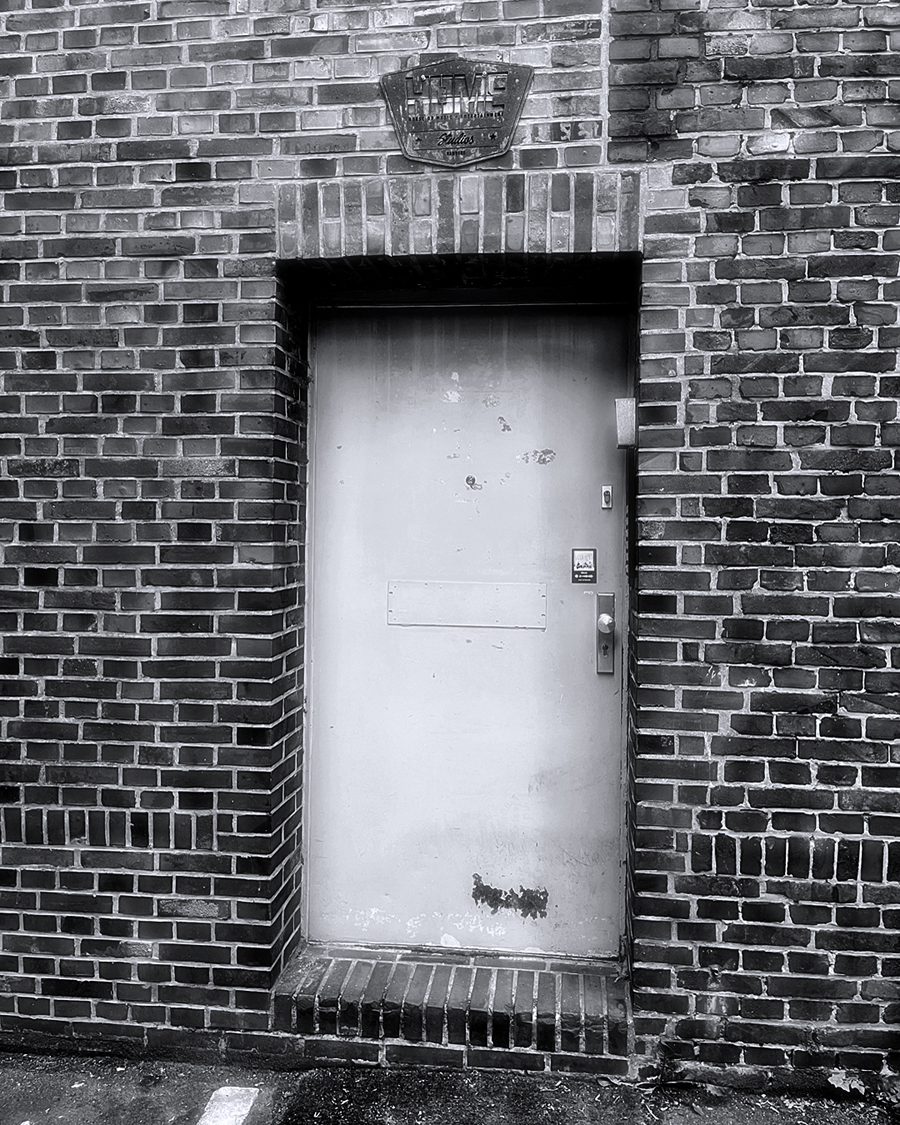
If you love Depeche Mode, this is hallowed ground. This arcade passage leads to a backyard where you find the entrance door to H.O.M.E. recording studio – it went by the name Château du Pape when the band worked here on SONGS OF FAITH AND DEVOTION.
VIOLATOR had been the breathtaking pinnacle of their career up to that point, the World Violation Tour had been a colossal success – but everything had taken its toll. „The four human beings at the centre of the maelstrom had been run ragged by the whole affair“ and now „faced a wall of intimidating proportions with the need to follow up the success of Violator.“ [*]
Flood thought it would be a good idea to assemble the band in a villa near Madrid, to live together and record together. „The following weeks would be one of the most toxic periods in the band history.“ [*] Dave Gahan: „I’d changed, but I didn’t really understand it until I came face to face with Al, Mart and Fletch. The look on their faces battered me.“ Gradually the band became aware of Dave’s heroin habit. „Most of the time I would sporadically come in and out of the studio and blurt out some ideas and then go back and lock myself in my room.“
„With barely anything in the can, the session had been a disaster. The claustrophobia of living in each other’s pockets, endless tinkering with no success, unspoken tensions, and a singer who was doing heroin in-between takes, meant things moved at a glacial pace.“ [*] – „It was a horrible, poisonous atmosphere.“ (Daniel Miller)
Initial attempts at „Walking In My Shoes“ and „I Feel You“ were undertaken, and for „Condemnation“ Gahan delivered what he thought was the finest vocal performance of his career, but overall the first 6 week recording session in Spain was largely unusable, described by Alan Wilder as „a complete f***ing waste of time“.
The move to Hamburg, and to a familiar studio atmosphere, proved crucial. Why Hamburg, of all places? I have no idea. Depeche Mode have made a shipload of songs you want to take to the tomb, but as far as albums go, I guess SONGS OF FAITH AND DEVOTION is my favourite. That large parts of it were created in my city, at such a nondescript place, will always baffle me. Andy wasn’t present, struggling with depression, after the traumatic time in Spain he stayed in England to get psychological help. Dave Gahan in particular wanted Depeche Mode to strike out in a new direction, yet it was primarily Alan Wilder who was responsible for the new multi-layered sound, the „harder“ and yet more organic feel of the music.
8 tracks were completed in 6 weeks. „Even though (Dave) was on heroin and wasn’t here most of the time, whenever he went into the studio and did a vocal, it was amazing.“ (Martin Gore)
Despite all the darkness closing in, despite all the drifting apart, Wilder said that the atmosphere within the group was „much better“ in Hamburg, and there were even lighthearted moments – Steve Lyon, sound engineer: „I remember walking along the Reeperbahn with the band and the whole crew; that was really fun. When we returned to the hotel where we were staying in Hamburg, we’d sit at the piano, play, and sing; fans would come in and watch… it was a very good, creative time.“
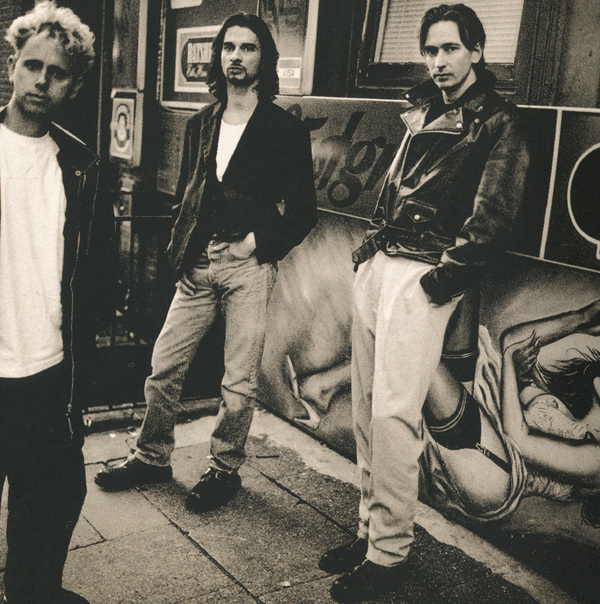
Depeche Mode in Hamburg: Anton Corbijn, Album Artwork
The album was wrapped in London but it was their time in Hamburg, in August 1992, where this classic took shape. There is a front entrance at Bogenstraße but most likely everyone was brought from Marriott Hotel to this very backyard by car, to enter the studio through this very door.
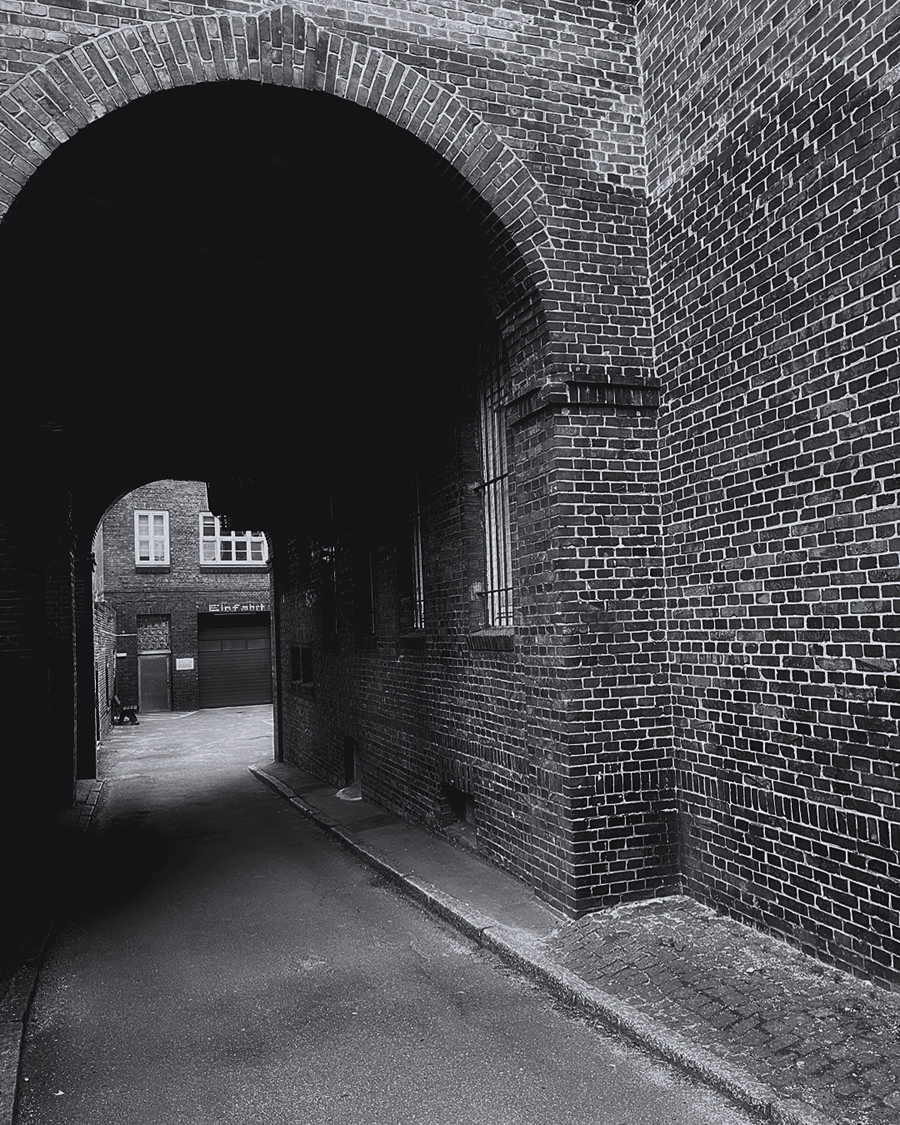
(Text aus meinem Instagram-Post übernommen, daher Englisch.)
Bogenstraße Photos CE
* Rik Flynn: Making Depeche Mode – Songs Of Faith And Devotion
[classicpopmag.com, 04/2025]
 Das Cabinet des Christian Erdmann