Helen Marnie, Mira Aroyo und ihre 2 Genossen haben den distanziert-erotischen Elektro-Minimalismus ausgebaut in eine betörende Vielschichtigkeit, in der sich Synth-Lagen übereinander türmen und ein „Speed Of Life“-artig verzerrt polterndes Schlagzeug Bass und Gitarren in den Electroclash zieht. Eine sonderbare Mischung jetzt aus warm und kühl, nach wie vor paßt aber der gelegentliche Song in Bulgarisch bestens zur gertenschlanken Hineingestelltheit dieser beiden irgendwie exoterrestrisch wirkenden Damen in Situationen, in denen der schreckende Übergang von Sex zu großem Gefühl zum Rücksturz mit dem Kubrickschen Raumgleiter verführt („I’m not scared to go home“). Wenn diese immer etwas verhallten, unterkühlten Stimmen „They gave you a heart“ konstatieren, klingt das immer noch wie die leicht verwunderte Selbstreflexion von Roboterpuppen, noch immer paart sich „Venus sucht den Superstar“ mit der sozialistischen Strenge eines völlig unbegründet optimistischen Aufbruchs, aber im Video werden jetzt schon mal pelzige Nager gehalten, auch wenn der energische Schritt nirgendwohin führt. Botschaften wie Lautsprecherdurchsagen in Metropolis: „I wrote a protest song about you.“ Hudson Astrolook + Melancholie, herzzerreißend schöne Melodien, die zugleich von enormer Traurigkeit sind, der letzte Song, „Versus“, ist schon fast unerträglich genial. Like a kitten versus rain.
Hafenklang, Goldener Salon, 14.08.2024. Weiteres Bildmaterial unmöglich aufgrund extensiver Exzessbejahung. Erika Switchblade (Toraldo), Gianni Blacula (Vessella). You either love them or you’re wrong.
„Heyday“ war ein ironisch gemeinter Albumtitel, Reaktion auf das Verdikt, das die Band nach „Remote Luxury“ traf: „Aw, they’re past their heyday.“ „Remote Luxury“ hatte zwei EPs aus dem Jahr 1984 zu einem für Church-Maßstäbe lediglich guten Album kompiliert, eine US-Tour endete finanziell im Minus, „The band was just drifting along in a sea of apathy“ (Kilbey). „Heyday“ war dann – genau das. Absolute Sternstunde, damals und für immer; Gold wert für Aljoscha in Rembrandtsommer und Poussinwinter.
„We’re still here, we’ve got the same ideals as when we started out, and we’re still aware there’s a special chemistry at work.“ (Marty Willson-Piper, 1986)
Marty Willson-Piper, „Heyday“ Liner Notes 2010:
„But, there was always some kind of built-in anti-success gene playing down our commercial side. We were notoriously difficult in interviews and Steve was cagey when it came to defining what The Church was actually about. (…) A magician is never asked how he does his trick.
I fell out with Steve one afternoon on tour in Hamburg and took the train back to Stockholm without playing the gig. [Am 10. Juli 1986. Willson-Piper war nach einer Woche wieder zurück in der Band].
‚Tantalized‘ was the second single. This song came out of a jam Peter and I had at the rehearsal studio when Richard and Steve were out of the room. Peter was behind the drum kit and I was slashing at chords like a mad person on my Rickenbacker 12 string then cruising into a frantic rhythm in the B-section before returning to the pattern that would be the verse. When the others came back we had this monster in there with us.“
God I’ve been asleep so long, I’ve been away Back from software limbo the natives call today I let their promises bind me I let seductive logic blind me I embraced a machine, went through the routine I hid from the people who were trying to find me Till the day comes when you realize Otherwise you never care Pandora’s box reveals a new surprise Can’t wait to see your eyes, now you’ve been tantalized For a hundred and one voluptuous days I broke the law The labyrinth was closing so we panicked up a door I let their wanton flesh obsess me I felt their dreams and drugs assess me I was hired and fired yet never inspired Flattering, chattering words to impress me All that glittered had me mesmerized Otherwise I would have dared Guess the nature of our enterprise Can’t stop to sympathize, now you’ve been tantalized I turned up in some harsh doomed city on another plane I couldn’t believe the room I got or the guests I entertained I felt the dirty streets surround me I let the buzzing swarm confound me I gave money to ghosts, I insulted my hosts I could never get off the stuff that spellbound me
„The drums are so thick and natural on Heyday that they almost sound like they were recorded in a fairy tale forest. (…) For my part, the songs were wonderful opportunities for lots of electric 12 string guitar parts. Moreover, the interaction between the other stringed instruments, Peter’s guitar parts and Steve’s bass were nothing short of magical. Peter Walsh obviously understood the dynamic of the guitars, and the rich tones on Heyday showcased the intricate webs we weaved.“ (MWP, 2010)
Seaside town in winter, I’m trying to write my book She’s broken down, it’s raining, I said I’d have a look Uncurling human tragedy Appropriately a mystery She tells my story back to me She said I’ll live this chapter till eternity
I let her go into the night Night of light, satellite Quite a sight to see
Oh oh what an ending baby, promise you’ll remember me I’m not pretending baby, your sweet and wicked treachery Water all my orchids, save my dynasty I said I’m never, never coming back again Never coming back again
“ … Heyday glows constant with startling colour and confidence“, schreibt Steven Cadbury [RAM, Australia, 02/1986]. Und Michael Morris [Juke, Australia, 01/1986]: „True, the inspired guitarwork and interplay with bass/drums provides a genuine excitement. But what draws the listener back time and time again is the yearning and vulnerable quality in the vocals, in such haunting tracks as ‚Myrrh‘ or ‚Tantalized‘. By definition, it’s spiritual music in the very best sense: it doesn’t always make sense except in the heart, which won’t ignore it. There might be a touch of confusion and venom in some of the lines, but it’s wit and charm strike beyond.“
„We’re interrupted by the telephone / You didn’t think they were invented then.“ Das Telefon klingelt in einer Zeit, in der es noch nicht erfunden ist: exemplarisch dafür, wie sich in Kilbeys Texten immer wieder Welten überlagern und durchdringen.
Aljoscha-Zeit: Spätsommer, zurück aus Florenz, „How can you be so invisible / Give me the nerves to see“.
Trotz begeisterter Reviews verkaufen sich die „Heyday“-Singles in Australien nur mäßig. EMI läßt The Church fallen. In den USA sind die Verkaufszahlen besser, und die Band beschließt, ihr nächstes Album dort aufzunehmen. Das US-Label Arista nimmt The Church für vier Alben unter Vertrag. Die Aufnahmesessions mit den Produzenten Waddy Wachtel und Greg Ladanyi geraten allerdings zur echten Herausforderung. Kilbey im neuen Jahrtausend über „Starfish“: „The biggie. The behemoth. The one to beat. Done with the geezers in LA. That’s called juxtaposition you guys. What a set of songs they had to work with though. We toughen up and lose some of the prettiness around the edges.“
„It was two worlds colliding – the West Coast scene’s obsession with perfection and smoothness and The Church’s predilection for jamming and psychedelia. We soon felt like the project was chained to a post, there was no chaos, nothing psychedelic and certainly no jamming. Richard in particular struggled to adhere to their strictness and when I listen to this record he sounds cautious.
We rehearsed the songs until they were perfect, like a gang of bank robbers going through the plan over and over again till there was no room for error.“
Steve Kilbey, 1988:
„Inspiration by its very definition means that you are unable to trace the source, I would have thought. It’s a bit like saying ‚what does something invisible look like?‘ Do you know what I mean? If it’s inspiration, you don’t know where it comes from.“
„I’ve just got this feeling that there is more going on than meets the eye. I think that song lyrics or ‚pop‘ songs should address these things more than they do.“
Marty Willson-Piper:
„The first track on the album was the cryptic, twisting ‚Destination‘, a good example of how far we had come in terms of writing as a band and the development of our sound. (…) The song takes you on a journey without moving, heading for a place you may not even be sure exists. (…) Arista released this song as a single. The light and shade of the arrangement, the builds from the verse into strident instrumental sections, the volume swells in the quiet choruses – great mood, great words, great guitars, great melody, great songwriting, bad single.“
Jemand auf YT: „Marty Willson-Piper’s guitar so transports this song into wondrous otherworldly places.“ Alle Gitarren, actually.
Our instruments have no way of measuring this feeling Can never cut below the floor or penetrate the ceiling In the space between our houses some bones have been discovered But our procession lurches on as if we have recovered
Draconian winter, unforetold One solar day, suddenly you’re old Your little envelope just makes me feel cold Makes destination start to unfold
Live im italienischen TV 1988. Kommentare:
My God this is one of the most intense performances. The guitar work by both Koppes and Wilson-Piper is just mind-bending! Emotive, powerful, timeless. I feel so grateful to have had The Church with me throughout my life. I would be a lesser man without their music.
Of all the Church stuff on YouTube, this probably comes the closest to capturing the magic of the guitar interplay of Peter and Marty.
Always such a mysterious band with mysterious songs – like this great one.
So raw and yet so dialed in. MWP and Peter are just so in sync here… Such a special band.
The Church = best damn guitars in the business. No one else even comes close.
Marty Willson-Piper 2010 über „Under The Milky Way“:
„My parts on the song were the 12 string acoustics. There are actually two rhythms played on different parts of the neck, one using a capo on the 5th fret, the other without a capo. The blend of the two make it hard to pick out the individual parts but the easy strum and evocative chord sequence introduce Steve’s naked yearning vocal perfectly.
Notice the second note on the bass – this is a powerful musical moment and helps contribute an unusual musical richness (…) Peter’s beautiful ethereal Wah-Wah electric guitar sends sparkling waves through the fragile shell of the song. A journey into something deeply philosophical ensues. There’s something about ‚Under The Milky Way‘ that takes you to another place, some timeless deep humanity that connects you to the stars, something that perfectly encapsulates you in the universe at peace in the great unknown, something that makes you close your eyes. We have lost count of how many times it has been covered. It’s a song that has its own life. It’s bigger than the band, a song that people who don’t even know the band, know.
We had no idea at the time of how this song would single-handedly write us into the history books and send us into the American singles charts.“
„Meanwhile, we were still struggling conceptually with the stiffness of the other songs. […] Interestingly we hadn’t really been willing or able to confront the issue of tempo within the band. Waddy came down on us like a ton of bricks about this and Richard was under constant attack. All this would lead to serious problems on the next album Gold Afternoon Fix that would change the shape of the band forever.
‚Reptile‘ was the highlight of Side Two and one of the most memorable tracks on the album. I wrote the riff in a rehearsal room somewhere in Sydney; it just fell out of my guitar like a diamond. Sometimes it just happens like that, but a riff is only as great as the song that follows it. It wasn’t just the lyrics and melody that made ‚Reptile‘ one of the great Church songs; everyone contributed their own crucial part. Sometimes a song can be mainly one person’s idea augmented by everyone else. Other times a song really is the sum of the parts working magically together. This was the case with ‚Reptile‘. Peter’s soaring guitar line, Richard’s intense hi-hat rhythm and Steve’s melodic bass line, acerbic lyrics and perfect melody brought this song to life.“
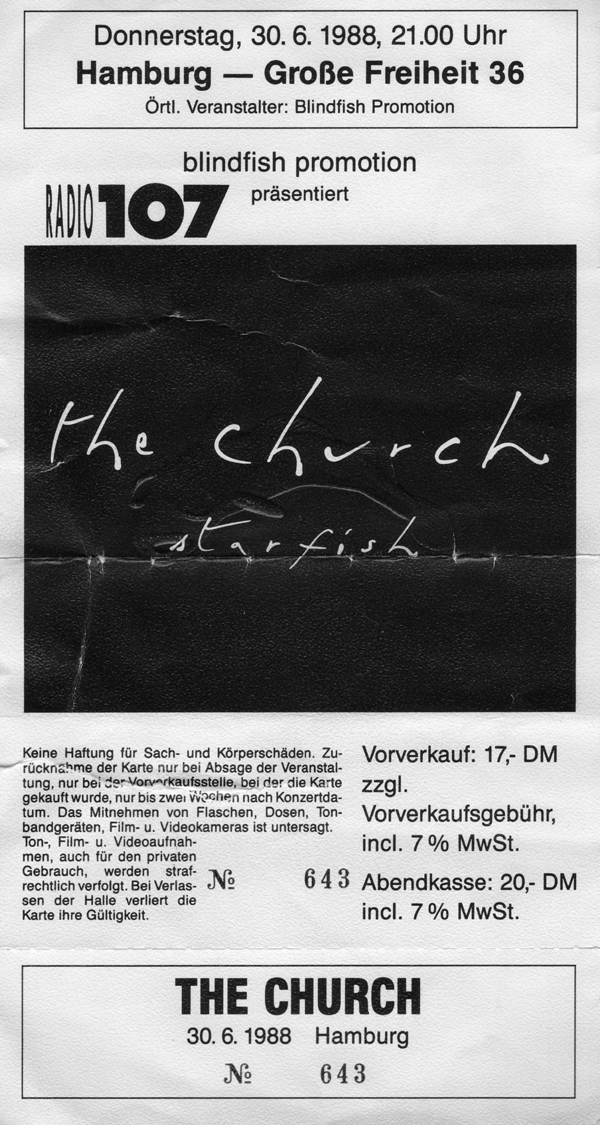
„Starfish“ erscheint im Februar 1988, und noch immer höre ich die Platte am liebsten aus kalter Winterluft kommend. Das Album katapultiert die Band auf eine neunmonatige Welttournee, Arista erhöht den Druck, man erwartet einen ähnlich erfolgreichen Nachfolger. Die Band hofft, mit John Paul Jones arbeiten zu können, die Idee wird jedoch abgelehnt, und so findet sich The Church Ende 1989 erneut in Los Angeles ein, um sich ein weiteres Mal in die kompetenten, aber kalten Hände von Waddy Wachtel zu begeben. Die Sessions dieser erzwungenen Liaison sind noch angespannter als die Aufnahmen für „Starfish“, und für Schlagzeuger Richard Ploog bedeutet dies das Ende der Reise.
Marty Willson-Piper, Liner Notes für „Gold Afternoon Fix“ 2011:
„By the end of the sessions Richard Ploog had only played on four songs and the absurd idea that a drum machine would compensate for Richard’s absence had been accepted. Consequently it was the most disappointing record the band ever made in terms of sound. (…) When I talk to people now I realise that a lot of the fans really did like it but unbeknown to them the problems were manifold. Richard had seemed to lose interest in the band, but it wasn’t just the music that was the issue. His relationship with Steve was fraught and he was on another life path […] Richard seemed to have forgotten he was the band’s drummer and with little encouragement from the production team he seemed resigned to the fact that he was not needed. […] Richard just did not have the discipline to carry on after the first few days‘ sessions. Waddy had eroded his confidence with his ferocity towards tempo, steady backing tracks and simplicity, showing less concern for excitement and spontaneous improvisation.
So Richard was sidelined. What happened next was perhaps the most stupid musical decision ever made on behalf of The Church. To overcome the problem of Richard playing the songs too fast, we were persuaded to use a drum machine.
But after we lost Richard we were sucked into the big machine, where we lost ourselves in glamorous photo sessions and expensive videos with faceless directors and a cast of thousands. Hollywood infiltrated our ranks. Our road crew was so large that we didn’t know all their names. Everything started to go wrong for us and culminated in two members leaving, waning sales, heavy drug addiction and no record deal.“
„Gold Afternoon Fix“ beginnt ominös mit „Pharaoh“, bleibt auf großartige Weise mysteriös und auf mysteriöse Weise großartig. Die Attraktion liegt gerade darin, wie die Band auch in einer Diktatur (Wachtel) ihrem eigenen Stern folgt. So klingt es, wenn The Church „Pop“ produzieren – futuristisch und doch zeitenschwer („a world passes by / with the sound of a young girl’s sigh“, „Transient“), metallisch kalt und doch romantisch, düster und doch zärtlich, melancholisch und doch strahlend schön wie Cinderellas Ankunft beim Ball. Vor allem aber viel zu weird, um jemals im Mainstream anzukommen. Kilbeys Zeitmaschine chromglänzend in der Asche stehend, grüne Schatten, ein ausgetrocknetes Meer, Traum von der Trapezkünstlerin in Metropolis. Mat Smith beschreibt im Melody Maker die Atmosphäre so:
„Gold Afternoon Fix is panoramic in its preoccupations – dreams and thunder, female universes – a sodium-toned Blade Runner landscape patented for their own backyard where the guitars no longer ring but brood, sounding an imaginary death knell for a worn out, silent planet.“
Und er spricht von „Steve Kilbey’s magnesium-eroded, despair-charred voice“. Magnesium-eroded. „And here, there’s lots of method in their madness, dear“, singt Kilbey in „City“, aber die Band infiltriert die Methodik der Produktionsbedingungen mit reichlich madness.
Willson-Piper 2011 über Kilbey: „Tethered, unable to break free to live out his stoner, sci-fi fantasy where elaborate and impossible worlds were inhabited by strange men and women and fantastic beasts that somehow spoke a language that we could all understand; a fantasy world that we could believe in. […] Which world should he be writing about – the world of reality or that of the imagination? The words seemed to jump back and forth between dimensions.
We had the songs, the imagination and the musical ability but no one seemed to quite know how to tap it, bottle it and sell it to the masses. Consequently we were doomed to be a cult band forever. A band you either loved or didn’t know. We were on the periphery of commercialism but equally too oblique to seduce the casual listener.“
Kilbey und Willson-Piper stehen später eher quer zu „Gold Afternoon Fix“, andere Bands würden an unheiligen Altären opfern, um nur einmal eine solche Platte zustandezubekommen.
„Terra Nova Cain, „with its lyrics that could be about alien seduction or just a kinky lover“ (The Morning Call, 1990).
She had unearthly eyes She had a way of sifting through your mind Like she’d done it to a million guys She said, will you help with our research I said, take me to your leader She put her foot down on the oscillation pedal She was a transdimensional speeder
Androidin / kinky lover in „her weightless bedroom“:
What is Russian Autumn Heart about?
„When I look at it, it’s probably a slightly anti materialism/pro aesthetic pursuit theme.When I was working in LA with Brix Smith, she was living in Sue Hoffs‘ brother’s guest house. His wife is Russian. She was reading one day in the back garden. She seemed incongruous in this warm sun-soaked Californian paradise setting. I made a comment to her about the book she was reading as I think it was something Russian that I’d read too.
She was so happy to discuss literature with somebody as she felt that people she had met never read ‚Great‘ novels where in Russia everybody with an education would gorge themselves on these works of art.“ – Marty Willson-Piper
„‚Fading Away‘ should have been great. It had a potentially captivating feel, the mood and the melody, a great chorus, some soaring guitar from Peter and me playing those three descending chords. Sonically unrealized again, there is magic in there somewhere but its hands are tied and it’s gagged and covered in polythene, kidnapped by the studio itself. The studio is a space ship and it’s the producer’s responsibility to navigate the stars and arrive at the right planet.“
Richtig aber falsch. Der Song ist alles, wovon Marty Willson-Piper glaubt, daß er es hätte sein können. „Fading Away“ ist my favourite auf „Gold Afternoon Fix“.
Don’t come to pieces in my hand White stars reflecting dust and sand That perfume makes me think of grief Shake the faith, shake the belief Who’s there to say that we’re living this moment Feels like I’m in a play The sets and the props of this, your apartment Seem to be fading away, fading away So I wander through these rooms I feel the orbit of the moons And I dream what I’ve become And all’s forgotten by the sun
I understood before I knew I realized I’d spend my life coming back to you
Ja, wie sagte schon Stan Laurel, der Weise aus Hollywood: „Man kann nicht alles haben. Das wär zuviel verlangt.“ Bis vor kurzem war Gram Parsons für mich auch nur die mit „Wild Horses“ verknüpfte Legende mit dem wohl seltsamsten post mortem-Schicksal aller Rockstars, dann aber hörte ich „Luxury Liner“ und dachte, oho, wieder mal dumm wie Brot gelebt.
Frisch geduscht (geduzt und ausgebuht) gebe ich aber nochmal zu bedenken, daß wir alle verloren in diesem Universum sind, in unseren eigenen kleinen schäbigen Memphis-Hotelzimmern, und den Geräuschen hinter der Wand zuhören, bis
Sharin Foo reinkommt.
Noch 1 Monat bis „Lust Lust Lust“, zur Feier des Tages feuere ich den Tag schon mal weg.
Unter deutschen Duschen
Oktober 2007
[Der Thread „Unter deutschen Duschen – was singen Sie denn?“ besetzte für lange Zeit im SPIEGEL ONLINE Forum (als das Forum noch Forum war) unter „Meistdiskutierte Themen“ Rang 1. Gekapert zu Beginn des Jahres 2007 vom Kommando „Ohne Musik wäre das Leben ein Irrtum“ und für ein paar Jahre das SPON-Hauptquartier von Tonkunst, Tiefsinn, Unsinn und Psychodrama.]
To listen to much of this album is to eavesdrop on a man wrapped up in a fantastic dialogue with the outermost reaches of his imagination. If the rumours are true, Arista initially refused to release „Priest = Aura“, not really understanding what the f*** Church songwriter Steve Kilbey was on about and rightly concerned for his physical and psychological welfare.
One minute attempting to deal with some grand allusion to the space-time-continuum, expertly turning some equally outrageous grand illusion into fact the next. „You’re so deluxe, you’re so divine, you’re so 50 light years ahead of your time“, he sings, a victim of the love wars as well as the star wars. When Kilbey calls his lover a mutant, the smooth-talking f***er does so with a dozen red roses hidden behind his back.
(Mat Smith, Melody Maker)
Tunis and Sardinia The ocean growing hungrier Beneath these walls we’ll sleep tonight Beneath this sky we’ll glide so bright
And kings will come and years will pass Stars burn cold beneath the glass And days will glow in distant times In distorted haze the zebras graze
In deserts where the dust storm blows And lush black swamps where mandrake grows We’re marching laughing to the drum Waiting for those kings to come
An infant with the voice of a crone In Nebuchadnezzar’s parking zone Calls out My Lord your end is nigh I didn’t mean to make you cry
„My favorite thing in the world is that state between asleep and awake,“ says Kilbey (…) „That’s where I want our music to put people. It all happens in a dreamy, hazy place.“ „In that tunnel to the nonlogical part of your brain,“ adds new drummer Jay Dee Daugherty. [SPIN Magazine, May 1992]
„I definitely think that The Church is aimed at the female aspect. Our music is definitely aimed at that source, a female state of mind, not necessarily a feminine state of mind. […] It’s more of a contemplative, gentle, emotional, sad kind of thing.“ – [Steve Kilbey, B-Side Magazine 1992].
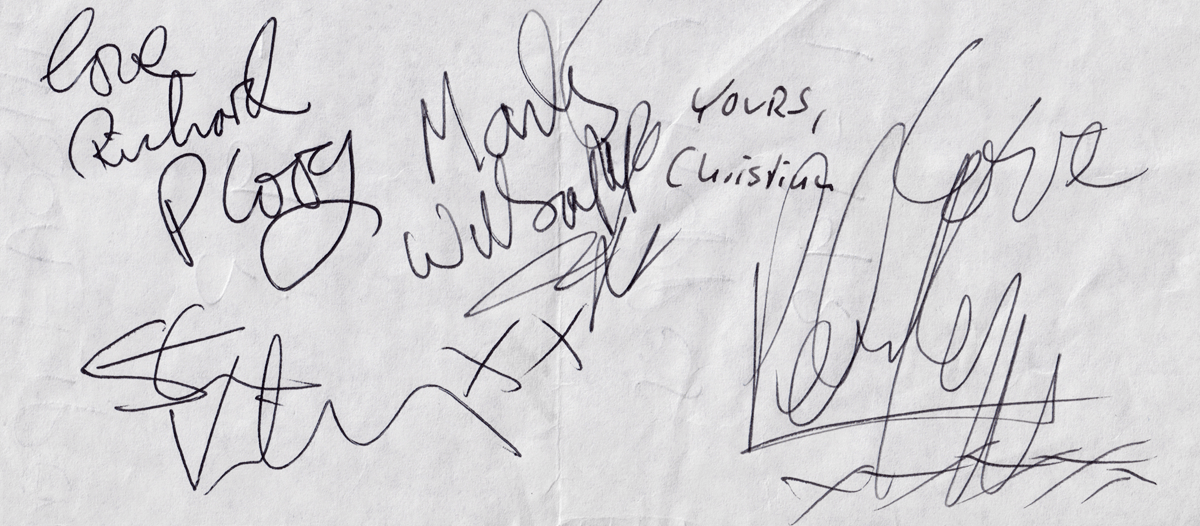
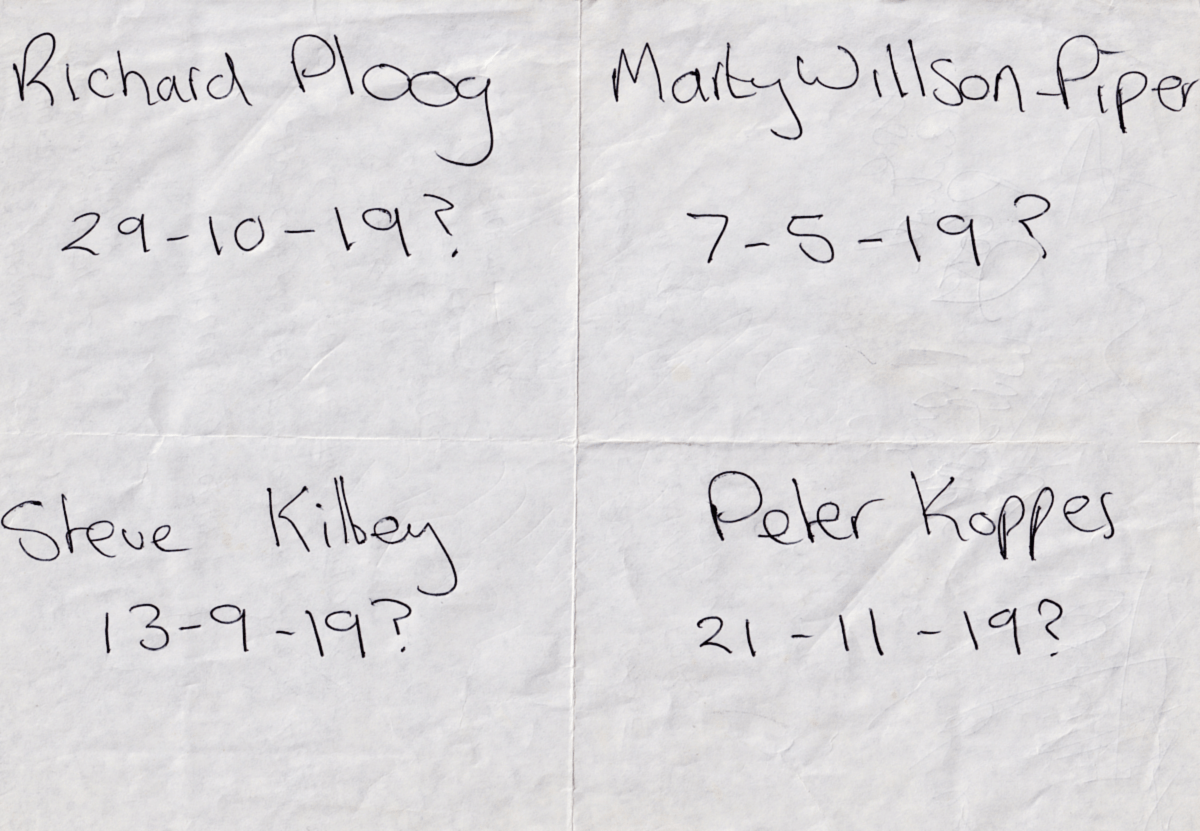
Ein ongoing project, ein ewiges Unternehmen in meinem Leben ist die Gestaltung eines Kalenders, in der ursprünglichen Form auf 36 Bristolkartons (für jeden Monat 3), mit Bildern von all den Menschen aus Musik, Film, Literatur, Kunst, Ballett, Mode, Geschichte, Philosophie, Kirchengeschichte, Fotografie, …, die in meinem / unserem Universum von besonderer Bedeutung sind. Um Geburtstage zu erfahren, schrieb ich in prä-Internet-Zeiten manchmal Briefe an P.O. Box-Adressen, die auf Schallplatten abgedruckt waren. Einer dieser Briefe machte sich auf den weiten Weg nach Australien.
Für Leser von „Aljoscha der Idiot“: „Am Tag, der ihr Geburtstag war, weilte Leda noch bei Sonja, während Aljoscha den Blick auf Dantes Begegnung mit Beatrice an der Westwand seines Zimmers ruhen ließ.“ – In dieser Szene lag mit ziemlicher Sicherheit „Heyday“ von The Church auf dem Plattenspieler in Aljoschas Zimmer. Zusammen mit der LP hatte ich die „Tantalized“ 7″ erworben, die B-Seite darauf war „The View“, gesungen nicht von Steve Kilbey, sondern von Marty Willson-Piper: einer der Songs, die Aljoscha im Walkman ständig hört, Songs, die Wagemut verliehen für das Beschwören des Unausweichlichen.
Take this daring leap Wake, you’ve been asleep Go attack your life The paint is peeling, scrape to save what’s yours
Polish your window, don’t block out your view
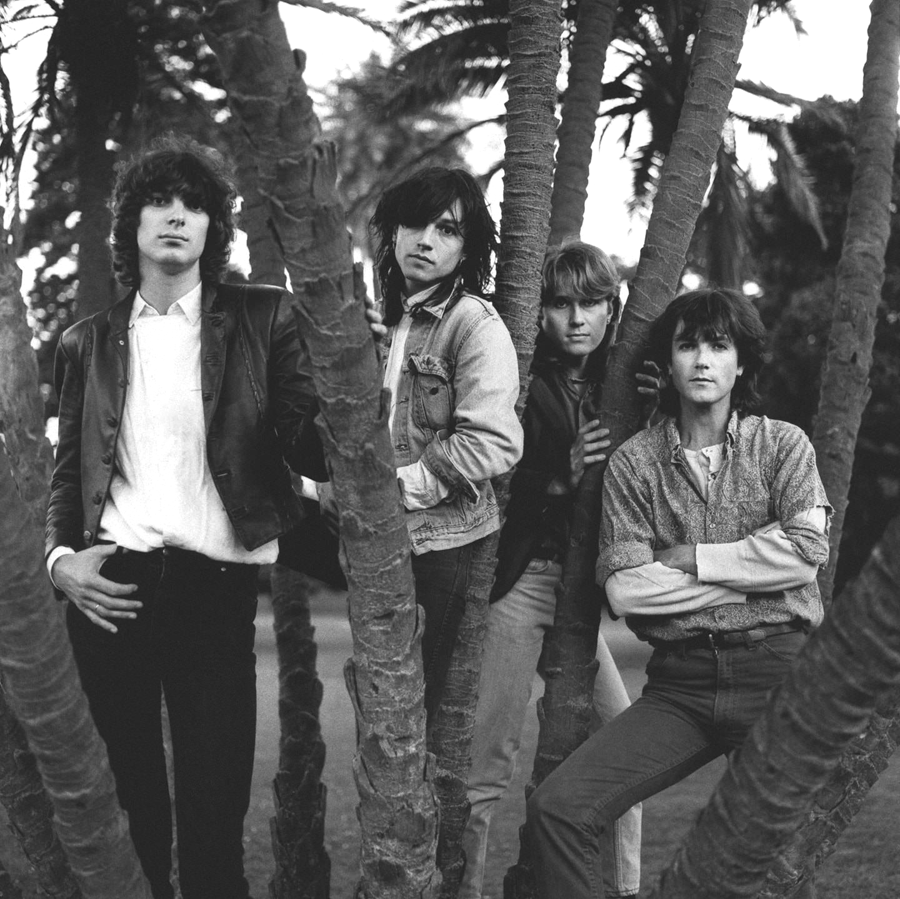
Einige Zeit später kam tatsächlich Post von The Church. Alle 4 hatten unterschrieben, und einer der 4, offensichtlich Richard Ploog, verriet mir die Geburtstage. It’s already yesterday, we’re off the calendar – but now they were also on it.
Uninvited, Like The Clouds
SPIEGEL ONLINE Forum „CDs der Woche – und Ihre Favoriten?“
23.08.2007
Mein derzeitiger Favorit ist „Uninvited, Like The Clouds“ von The Church. Die ist zwar schon von 2005, aber die Bandgeschichte findet eh in einem anderen Raum-Zeit-Kontinuum statt. Wie ja alle eben nicht wissen, ist dies die meistskandalös ignorierteste beste Band der Welt. Die beiden Gitarristen, Marty Willson-Piper und Peter Koppes, sind Bewahrer diverser Geheimnisse, zum Beispiel: wie würde ein fliegender Teppich klingen, wenn er klänge? Beide weben, Song für Song, seit 25 Jahren, einzigartige Texturen in einer ebenfalls einzigartigen Weise des Zusammenspiels. Ein Church-Song erklärt dir, wofür Gitarren erfunden wurden. Der größte Faux-pas im Zusammenhang mit dieser Band ist der Satz: Waren das nicht die mit „Under The Milky Way“? Ja. Waren sie. Und sie sind siriusweit davon entfernt.
„Uninvited, Like The Clouds“ kommt 20 Jahre nach „Heyday“ und 13 Jahre nach „Priest = Aura“, den beiden bislang besten Alben von The Church, und als Bonus gibt es Pausen zwischen den Songs, die als akustisches Menetekel plötzlich die blasse Einfallslosigkeit von Heerscharen anderer „The“-Bands erscheinen lassen. Steve Kilbey hat eine Stimme, der man glaubt, daß er tatsächlich im Zeitalter Nebukadnezars der Entdecker der Melancholie war, besser, der toska, der unbestimmten Sehnsucht nach etwas Unerreichbarem, das dann doch immer wieder in Wahrnehmungen aufblitzt, für die Kilbey seit jeher magisch-mystische Bilder findet, in denen Dinge zusammenkommen, die sonst nicht zusammenkommen. Die Band befindet sich, nach endlosen Turbulenzen, in ihrer x-ten kreativen Hochphase, längst jenseits von Gut und Böse des kommerziellen Erfolgs, trotzdem: spenden Sie Ihr Geld dieser Kirche.
Eventually We came to a chasm dark and wide And drifted in silence through endless anenomes In shallow dreams Life was beginning to take a shape Water was warm as it hastened our enemies
This kind of world will start a little colony This kind of earth will eat a little energy This kind of thing needs a little secrecy
After thousands of years Our priests have predicted you would come You with your death that appears in no photograph We watched the night sky We bickered like fools amongst ourselves We sought protection in artificial youth
This kind of world will start a little colony This kind of earth will eat a little energy This kind of thing needs a little secrecy
In a sickening jump I fell through the surface of my life And I was caught back by the hollow camaraderie The planet was still Nothing moved as it slept in space I pulled on my suit and exited quietly
Just like the stories they tell ya Just like the tripe that they sell ya Just like the dead you say hell yeah
Watch out You can never be certain if anyone is really a friend This could have been such a sweet thing
Ein ruhiges und ein aufgewühltes Meer zugleich
SPIEGEL ONLINE Forum
15.11.2008
Eine meiner absoluten Lieblingsbands, wiewohl es natürlich viele Weisen des Lieblingsbandseins gibt. Kilbey ist einer der besten Songwriter on God’s Green Earth und die Band eine der schmählich Unterschätztesten. „Under The Milky Way“ wurde kürzlich zum Best Australian Song der letzten 20 bzw. 20 000 Jahre gewählt.
„I just stumbled upon it and for some reason it has struck this wonderful sense of universality with people that most of my songs don’t.“ – Steve Kilbey
And it’s something quite peculiar Something shimmering and white It leads you here despite your destination Under the milky way tonight
Wish I knew what you were looking for Might have known what you would find
SPIEGEL ONLINE Forum
05.03.2009
Zweimal live gesehen, Hamburg war immer ein heißes Pflaster für die Band (die haben sich hier gar mal kurzzeitig getrennt), aber die Konzerte waren phantastisch, mysteriös und intensiv.
SPIEGEL ONLINE Forum
23.04.2009
„Priest = Aura“ dürfte ihr ewiges Meisterwerk bleiben. Die Magie von The Church ist schwer zu beschreiben, man müßte dafür das englische Wort „imagery“ heranziehen, vielleicht auch das Wort „otherworldly“. Ich kenne keine andere Band, die durch das Zusammenspiel von Text und Musik eine Art von IMAGERY herstellt, die derart enigmatisch Zeit und Raum durchquert. „Otherworldly“ bedeutet dann: Augen, die sich umsehen in der Welt hinter der Welt.
Steve Kilbey: „I write songs that I may not understand for years.“
SPIEGEL ONLINE Forum
12.02.2011
The Church: ich habe gerade dieses Interview mit Steve Kilbey gelesen, in dem er meint, daß wirklich keiner voraussah, in welche Höhen „Under The Milky Way“ abheben würde, es war der Song auf „Starfish“, von dem die Band eigentlich am wenigsten hielt: „It was kind of the black sheep of the album that nobody wanted to know about.“
Wenn es Tage gibt, an denen ich weiß, daß die Seele ein ruhiges und ein aufgewühltes Meer zugleich ist, dann ist, time and again, The Church im Spiel.
Adventskalender 2014:
„Further / Deeper“ gibt es hier noch gar nicht (oder nur als Import), habe sie im Churchshop bestellt, die zweite Post, die ich jemals aus Australien bekam. Die erste war auch von The Church. :)
Müssen die erste Platte ohne Marty Willson-Piper machen (lebt in Schweden und antwortete einfach nicht mehr), und produzieren, Ian Haug neu in der Band, so ein Zauberkünstlerstück.
Wie immer schicken sie dich in ein Labyrinth, für das nur du den Faden hast, und das Mysterium endet mit „Miami“. „I’m moving back to Miami“. Die ödeste Zeile, mit der man einen Song beginnen kann, aber da Steve Kilbey hier die Texte schreibt, gelangen wir schnell ins aurale Äquivalent eines rätselhaften Films. Der Erzähler scheint eine Verflossene überreden zu wollen, ihm nachzukommen, zu „my place by the sea… I think Humphrey Bogart stayed there in 1943. He was joined by Janet Leigh, Babe.“ Beunruhigende Andeutungen in den Zeilen: „It’s easier for you / Asleep in the darkness / After what you went through“. Als es dann plötzlich weitergeht mit „I don’t think I mentioned I met someone else“, „She was better than both of us“, wird das Narrativ unscharf, Zeitebenen verschieben sich, „Whatever I say, it has escaped me“, die Frau, für die er das Geld für ein „first class on BOAC“-Flugticket auftreiben will, ist wahrscheinlich lange tot: „I think of you cold / I think of you still / I think of you living / Your ziggurat on a hill / The gardens were moving / Like waves on a shore / My head always aching / My eyes always sore“. Und dieser Moment, als der Bewußtseinsstrom in a confused mind, in dem die Erinnerungsfragmente, die Geister der Vergangenheit durcheinanderwirbeln, vielleicht selbst adead man’s dream, „Swimming pool heat / Some weather door slammed / A car started up / Frequencies jammed“, einfach nur noch sinnlos insistiert „Miami, Miami“, wie ein Ruf ins Jenseits, oder aus dem Jenseits, keine Zeile könnte an dieser Stelle wirkungsvoller sein, it totally thrills me, it’s fucking genius.
Steve Kilbey, 11.01.2012, auf The Time Being:
of course peter koppes of whom it is hard to imagine a time when he was not accomplished on a load of instruments his understanding of music is that of an absolute master his playing is filled with restrained power and melodic grace his sound is vast and distant sometimes its hard to understand what he is actually doing to his apollo is marty’s dionysus more abrasive more metallic more inflaming thus they interweave both being yin and yang at anyone time
„Of Skins And Heart“, das Debut von 1981, wird 2010 wiederveröffentlicht mit Liner Notes von Marty Willson-Piper:
„The lyrical juxtaposition of down to earth realism and sci-fi fantasy (…) became a constant element and a defining ingredient of The Church.
It all started here with this ragged yet accomplished debut, not only spawning a hit but also capturing a following of devotees that would never go away.“
„Is This Where You Live“: „On this track the band really gelled. (…) Dynamic build-ups, atmospheric soundscapes and arpeggio 12 string guitars became trademarks of the band’s sound. Steve’s surrealistic lyrics and Peter’s amazing reverse guitar solo were the icing on the cake. Intertwining phosphorescent guitars created such a deep sonic landscape that you’d swear there was a guitar motif in there that nobody played. That was ‚Gusto‘ our imaginary friend and he never left us.“
„The Blurred Crusade“, 1982, Liner Notes von Marty Willson-Piper 2010:
„But we didn’t care that much about what people thought. We were blazing our own trail, engrossed in our own magic, only looking up occasionally to see if the trick was working and if it wasn’t, we would just carry on, looking down, holding on till the end of the show like drowning sailors.
Steve had a handful of new tracks for this record but, as the band was entering into its second year with a vibrant new drummer, we started to jam together more and more. The musical chemistry was enhanced by Richard’s fluid drumming. He was effortless on the hi hat and the songs took on a new smooth feeling of flying through the clouds. The band was suddenly breezy and natural; the tension within the group and in the music had dissipated somewhat with Nick Ward’s departure and the songs were now gliding across the tops of the trees, softly brushing the leaves. This velvety backbone, combined with the impossible chords we were creating, enhanced Steve’s songs and opened us up to the possibilities of the music we could make.“
„An Interlude“: „Steve sings of a dream world of capture and escape, willing prisoners and doubtful guests in netherworlds of imagined mythical figures. The female voice behind Steve’s is Mary, Bob [Clearmountain]’s wife.“
„They’re going to send you away“ she said Psychic angels spread on the top of her head
„You Took“: „It continues to be a crowd favourite with its dynamic peaks and troughs, intense climbing, jamming and extended instrumental middle section which grows and grows and grows till you just can’t take anymore and when the final release comes it feels like an express train ejected out of a tunnel into the relief of daylight.“
It’s a shame it’s not a game We’re playing in it’s just the blurred crusade The blurred crusade
„When You Were Mine“: „This was one of Steve’s songs that the band transformed into a snarling beast. (…) Strange half invented characters inhabit an unfinished world; a stark landscape of cold dreams. Shapes form and disappear before your eyes as you try to focus on who they are or why they are there.“
On a day like this, a hundred lifetimes ago You on a shore, across the point I looked through my hands and you drew me a line When you were mine
In a storm like this, a hundred kisses of snow You with another so easily sleep What’s real and what’s dreamt become close and entwine When you were mine
It’s a long way home from the Field of Mars Distant, alone, beneath the platinum stars And I turn to look, but I’m never any closer Only just the rain makes the skin feel colder All my life seems so far away Air is soft in the Field of Mars Tears and loss feed the overgrown grass And I have to leave, but I never seem to go Only more sad clouds where autumn winds will blow All my dreams seem so long ago Oh, Field of Mars Time is past in the Field of Mars Grief won’t last in the departing cars And I call her name, but she never ever hears And I call again to the cruelty of the years Oh my love she’s so far away Oh, Field of Mars
„Seance“ war meine erste LP von The Church, ich suchte nach ihr, nachdem irgendein Magazin sie als Platte „von geradezu überirdischer Schönheit“ beschrieb, und ich trug sie am selben Tag nach Hause wie den Zauberberg. An „Seance“ mag beim ersten Hören der Sound des Schlagzeugs irritieren, der ohne Wissen oder Einverständnis der Band beim Mix der Songs durch Nick Launay zustandekam; Marty Willson-Piper schreibt 2010 in den Liner Notes zu „Seance“:
„We all felt the same way about what we heard; Richard was frankly stunned. The tracks sounded so far removed from where they were when Nick was handed the multi-tracks. Only later did I realize that this is what he was hired to do – produce the mix as he saw it! Nick’s credit on the album was ‚Mix Engineered And Produced By Nick Launay‘. But can you imagine how the machine gun snare on ‚Electric Lash‘ sounded to Richard when he heard it for the first time? We wondered how Nick Launay could make changes as substantial as this without considering the opinion of the band. (…) Listening back to Seance now I must say that I’m finally used to it. But on first listening we were somewhere between shocked and horrified!“
Used to it war ich nach nur einer Umdrehung von Seite 1 und Seite 2, ich liebte die Platte von Anfang an und seitdem immer mehr. So sehr manche Lyrics meine Gegenwart beschrieben – was ichdamals nicht wußte, war, wie genau manche Lyrics von „Seance“ meine Zukunft vorwegnahmen. Memories in Future Tense heißt ein Song auf „Of Skins And Heart“.
One day, doubtless, cloudless, bright We’ll shake away the shadows of eternal night It’s just the storm before the calm Like the life held in your palm – it’s clay, one day
And you stand there, with ashes blowing past Dipping into gilt-edged love that will be made at last And the gold you spend and the hastening end That you throw into the sea Coming back a hundredfold, there’s no guarantee
We’ll walk and be like giants, we’ll all be honest men I go back to my blindness so that I may see again A woman standing on a hill is gazing out to sea Dreaming of a new age waiting there for me I call her from a distance and she smiles into the sun And men and gods begin their dance, for their time has begun And holy wars extended and battlefields of pain Are washed away, forgotten in the perfect rain Princes, kings and humble things are well-worn and content Messengers come everywhere, envoys have been sent
Marty Willson-Piper: „Ultimately we were able to live with the strange series of events that took Seance from being our baby, to someone else’s demon child and to our astonishment the real fans of the band loved it.“
Steve Kilbey:
„The one the real aficionados claim to love the most. It bombed at the time. It’s tres romantic (my love). Doomed poets and mediums contacting the beloved. The constant dialogue between the living and the dead. Unloved at the time by the philistines passing for journalists. (…) And btw we invented goth on this very record. Right in front of your eyes.“
Marty Willson-Piper: „What EMI couldn’t have imagined was that Nick’s dark production and crashing samples made us sound even more mournful and distant, almost gothic, industrial at times. The band sounded much more left of centre than The Blurred Crusade and this was largely due to Nick’s mixes. (…)
It was as if the label, in attempting to steer us towards greater commercial success, managed to spectacularly achieve the opposite (…) the label had made us into a cool underground band instead of a commercial pop group … by mistake. And it left them unable to do anything commercially with the monster they had helped create. (…) The coffin lid (!) was sealed with a brilliant album cover (…) It was a picture Kim [Sandeman] had taken of one of her friends (Meg) for an art project. The shrouded pale figure with sunken eyes, holding a metal flower, a petal between her lips, was such a strong and evocative image that the band won fans and sold copies of the album by the power of the cover alone. Treated with a pink wash the artwork was complete. It was profoundly thought provoking and visually striking at the same time. In Europe, Carrere released the album in exactly the same form except the cover was a vibrant turquoise blue, changing the effect but maintaining a striking image.“
Und Aljoscha würde sagen: „Du hast noch nie etwas verloren.“ Und sie würde sagen: „Doch. Dich.“
That’s „Disappear?“.
Marty Willson-Piper: „I played the strumming acoustic guitar on ‚Disappear?‘, one of Steve’s moody masterpieces. Tons of chords going backwards and forwards in unnatural patterns provided a landscape for the strong images in the opening line, ‚Like a womb, the night was all around‘. And there was a line that typifies the intangible journeys of The Church, ‚It’s like the fog you walk towards but never seem to reach‘. There was another dreamy solo from Peter on the outro, played on one of his two Strats.“
So many things I still don’t understand The dream I was having took on an ugly face I don’t know if I was walking through heaven It could have been any place Skipping cross the water, wading through the sand Awake to find you gone, emptiness is where you lay Well I just had to smile for all the things you’ll never hear me say Now what do you expect me to do, disappear? You and me, we’re as free as we can be Can’t you see, like the trees so obviously The message disturbs me so I throw it to the wind And after all these hellos good-byes etc. etc. We can’t start this thing again It’s like the fog you walk towards, but never seem to reach Every morning now I hear that same old song And though the singer is long dead, his voice goes on and on Ugliness you have to learn, beauty you can’t teach
Alone, at the end of the day As I stand before the relics of what used to be you and me You turn with the tears in your eyes Not understanding that you are free, free of me
SIE hatte sich in seine Träume geschlichen in einer der Nächte SEVEN LONG NIGHTS TO THINK zwischen Dienstag und Dienstag […]
„Was schenkte dieser Blick? Hundert Rätsel und eine Gewißheit: er hatte existiert darin.“
Our eyes meet and I love her I suspect she already knows How those eyes see me so very, very clear Even when they’re closed
Sinking silk and burning gold Touch you as the air is turning cold Another place I look for you The heights above an almost perfect view
Seeing things just rest a while As the tide sweeps out another mile Inside the man the pleasure dome This is the world that I once called home
Strangers in their naked skin Waiting for their sweet oblivion Close to you, hear all you say Even though you’re continents away
The perfumed air, the taste of fear Shrug your shoulders and they disappear Take this gift and let it grow Let it be all the hope you know It doesn’t change
„Aljoscha trug die ersten Dinge in die Zimmer, die ihn erwartet hatten – ein paar Schallplatten, Geschirr und einen Band Gedichte von Majakowski.“
Zu den Schallplatten gehörte „Unearthed“, Solo-LP von Steve Kilbey, erschienen 1986.
Like a lizard the road crawls on Into regions unexplored
I’ll wait for you forever In my house all white with dust Falling into lonely hours Let the engines rust
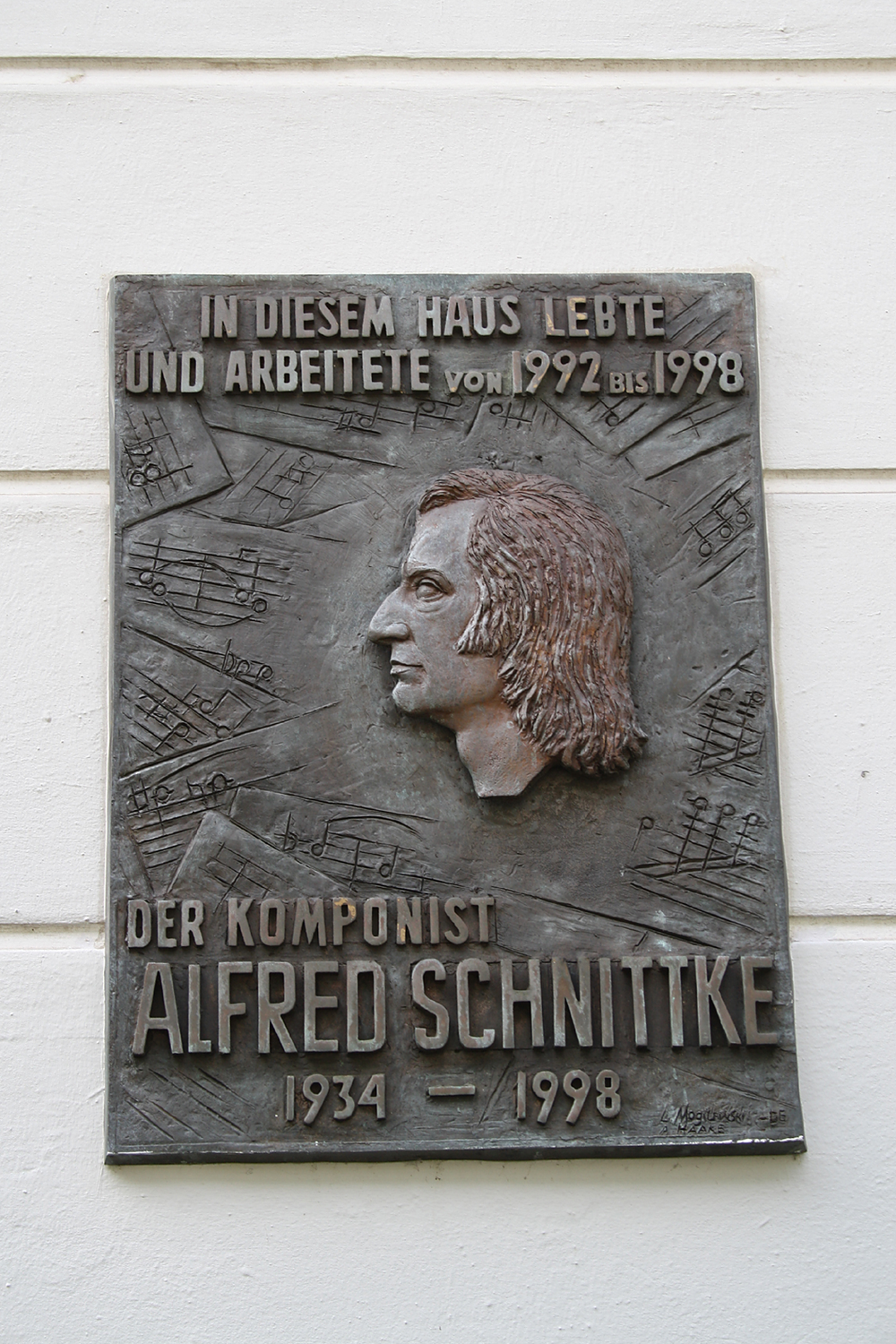
Nicht weit entfernt von meinem Neorenaissance-Schlößchen (a.k.a. Zauberberg für Idioten) gibt es eine Straße namens Beim Andreasbrunnen. Würde ich nicht ohnehin in Hamburg leben, wäre sie für mich ein Grund, nach Hamburg zu pilgern, denn in dieser Straße hatte der Komponist Alfred Schnittke sechs Jahre lang sein Domizil: von 1992 bis zu seinem Tod im August 1998 wohnte der 1934 in Engels an der Wolga geborene Schnittke im Altbau Nr. 5.
Bereits für „Endstation Sehnsucht“ hatte John Neumeier, Choreograph, Direktor des Balletts an der Hamburgischen Staatsoper und godlike genius, ein Werk Schnittkes verwendet, die Sinfonie Nr. 1. 1985 bringt Neumeier sein atemraubendes, herzzerfetzendes „Othello“-Ballett auf die Bühne; Schnittkes Concerto grosso Nr. 1 erklingt im 2. Akt, als Verzweiflung und Wahnsinn ihren Lauf nehmen. Ich sah dieses Ballett einige Jahre später zum ersten Mal, ich sah „Othello“ insgesamt siebenmal, stets in der Besetzung mit Gamal Gouda als Othello und Gigi Hyatt als Desdemona, beim ersten Mal ging ich allein, sechsmal dann mit IHR. Nach dem ersten Mal schrieb ich ihr.
„Mein Gott, der 2. Akt – als sich die Musik von Schnittke in das Stück bohrt wie die nagenden Würmer der Eifersucht in Othellos Herz – wie er zusammenbrach unter dem Hohnlachen Jagos und der Primavera. Ich weiß nicht, irgendwas stimmt nicht mit mir, wenn ich im Ballett bin. All das nahm mich so sehr in Bann – so muß das griechische Theater gewirkt haben, mit dem, was Aristoteles Katharsis nannte. Jago trieb mich in die Vorstellung, wie es sein müßte, Dich in fremden Armen zu wissen – so zu fühlen, und – als Zuschauer – doch gleichzeitig zu wissen, daß Desdemona unschuldig ist … es zerriß mich. Die Szene, als die letzte der Grazien – die letzte Erinnerung an das Schöne, das letzte mögliche Zurück – fällt, und Othello Desdemona festhält – ihr Entsetzen, namenlos – und wie Gamal Gouda von nun an für lange qualvolle Minuten nur noch düsterste Entschlossenheit ausstrahlt, das ist so erschütternd.
Und als Othello Desdemona schließlich tötet, gleich darauf mit der blitzartigen Erkenntnis ihrer Unschuld alles über ihm zusammenbricht – die Minuten, in denen Gamal Gouda vor ihr saß, gebrochen, regungslos, leer, dumpf, mit einem Gesichtsausdruck, der nicht mehr von dieser Welt war, in dem alle Vergeblichkeit, alles Scheitern, alle Verblendung war, grenzenloses Geschlagensein, der allerletzte Blick, der dem Menschen möglich ist, der betrogen ist, der sich aufgelehnt hat und nun erkennt, daß er das einzige getan hat, was nicht wiedergutzumachen ist, daß er das einzige verloren hat, das einzige – ich hatte Tränen in den Augen. Und all das geschah ganz in Deiner Welt.“
Und all das geschah zur Musik von Schnittke, in der genau dies zu hören ist: „Selbst das Firmament ist erschüttert. Die Himmelssphären sind aus dem Gleichgewicht. Es ist, wie wenn der Wahnsinn von den Sternen auf die Menschen niederkäme.“ [1]
Desdemona. Der Shakespeare-Exeget Jan Kott sagt über sie: „Sie weiß nicht einmal, daß sie durch ihre bloße Anwesenheit beunruhigt, daß ihre bloße Anwesenheit ein Versprechen ist. Othello wird es erst erfahren, Jago weiß es von Anfang an. Desdemona ist treu, aber sie muß etwas von einer Dirne an sich haben. Nicht in actu, aber in potentia. Sonst kommt das Drama nicht zum Tragen. […] Desdemona ist besessen von Othello, aber alle Männer […] sind besessen von Desdemona.“ [2]
Nach der ersten Liebesnacht verhält Othello sich so, „… als hätte er eine andere Desdemona vorgefunden als die erwartete. […] Es ist, als ob ihn die Explosion der Sinne bei dem Mädchen verblüfft und schockiert hätte, das noch vor kurzem mit niedergeschlagenen Augen seinen Erzählungen lauschte. Desdemona fühlt sich von der ersten Nacht an als Geliebte und Frau. […] Je heftiger Desdemona sich in der Liebe vergißt, desto mehr wird sie in Othellos Augen zur Dirne.“ [3]
Jago, der dämonische, nihilistische Psychoanalytiker, bringt Othello dazu, Desdemona namenlose Orgien zuzutrauen. Und wenn seine Frau ihn betrügt, dann betrügt ihn das ganze Universum. „Die Engel verwandeln sich in Teufel. Allesamt.“ [4]
Ich verließ nahezu jedes Ballett von John Neumeier mit dem Gefühl, soeben sein bestes Werk gesehen zu haben – was nur beweist, daß er in Bereiche führt, in die das Sprechtheater – zumindest mich – niemals führen könnte. Der erste Pas de deux von Desdemona und Othello aber – zur Musik von Arvo Pärts „Mirror In A Mirror“ – ist das Bewegendste & zugleich Sensationellste, das man in der Weltgeschichte der Choreographie erleben kann… bis zum letzten Pas de deux von Desdemona und Othello.
„Tante Anna fragt ‚Geht ihr nur so hin, oder muß Deine Freundin auch tanzen?‘ Wir gehen nur so hin, nehmen ein Taxi – so daß Madame sich in der Halle der blauen Lichtpunkte die Nähte richten lassen kann – wir sehen die weißen Kostüme mit den Schildern MAZON, HERRMANN, CAZZANIGA, FEUILLETTE – Unser Platz ist ganz oben, am Rand, wenn wir uns umdrehen, sehen wir diesen kleinen Verschlag, in dem Tänzer sich umkleiden – wir hören die Moresca-Glöckchen [5] – Eric Miot zieht den Vorhang zu und grinst zu mir hoch – I’ll never forget the picture. Er zerbricht wieder seinen Stock. OTHELLO. Ich könnte es jeden Tag sehen.“
Says my diary. Das Areal der alten Maschinenfabrik war noch angenehm unübersichtlich, und von der Halle der blauen Lichtpunkte bewegten wir uns unbemerkt an den Kanal, sie hielt sich fest an einem Geländer, und unter dem Großen Wagen schoß eine Fontäne Mondlicht in sie – Schnittke zum Concerto grosso Nr. 1:
„Das Klavier wird durch einige zwischen die Saiten geklemmte Münzen klanglich verfremdet und dabei durch Mikrophon verstärkt – es symbolisiert sozusagen eine äußere Macht in diesem Stück.“ [6]
Concerto grosso Nr. 1 (1976/77) für zwei Violinen, Cembalo, präpariertes Klavier und Streichorchester Gidon Kremer, Tatiana Grindenko – violin Yuri Smirnov – harpsichord & prepared piano The Chamber Orchestra of Europe, Heinrich Schiff – conductor
1989 arbeitete Neumeier mit Schnittke für das Ballett „Peer Gynt“ zusammen – extensive Würdigung meinerseits
Wünschte, ich könnte Euch zu einer Synapsenkonferenz einladen, um 130 Minuten „Peer Gynt“ von Alfred Schnittke zu hören. Nach seinem Schlaganfall 1985, Schnittke war klinisch tot, sprach er von einer grundlegenden Veränderung seines Zeitgefühls, von einer neuen Fähigkeit, „die sich nämlich ausdehnende Zeit zu empfinden.“ Genau darin muß das Geheimnis seiner „Peer Gynt“-Musik liegen. Wie in Marienbad halt.
02.07.2011, SPIEGEL ONLINE Forum
Alfred Schnittke, der Epilog aus der phantastischen Ballettmusik zu „Peer Gynt“, „Aus der Welt / Out of the World“. Wenn man die ganze Ballettmusik durchgehört hat, ist man hier bereits komplett durch den Wind, und der Epilog stellt merkwürdige Dinge mit einem an. Die letzten fünf Minuten sind überirdisch. Kopfhörer sinnvoll.
„Peer Gynt“ ist in einer Aufnahme mit dem Orchester der Königlichen Oper in Stockholm unter Eri Klas erschienen. „Oft trägt mich die Musik, dem Meere gleich, zu meinem bleichen Stern“ (Baudelaire).
Die Schattenklänge, mit denen „Peer Gynt“ endet, beschwor Schnittke auch am Anfang seiner 3. Symphonie, dieses „Moderato“ beginnt so unwirklich, wie Musik nur selten wird – als wäre der Beginn des „Rheingold“ in den Kopf eines Mannes verlegt, der soeben erkennt, daß es wirklich ein Traumland gibt: weil er sich darin in Zeitlupe bewegt und zusieht, wie die Dimensionen sich aufheben.
Meine Aufnahme ist vom „USSR Ministry of Culture Orchestra“ unter Gennady Rozhdestvensky, ich weiß nicht, ob die noch erhältlich ist.
„I set down a beautiful chord on paper – and suddenly it rusts.“ – Alfred Schnittke
Zugabe: ein 3-Minuten Exzerpt des ersten Pas de Deux von Othello und Desdemona, Musik Arvo Pärt.
„Master and Margarita“, Filmmusik.
Musik für den sowjetischen Film „The Story of Voyages“ / „The Fairytale of the Wanderings“ / -> Сказка странствий, 1983, arrangiert von Frank Strobel.
[1] Jan Kott, Die zwei Paradoxe des Othello, Programmheft zu „Othello“, 13 (aus: Shakespeare heute, 1964) [2] ebda. 19 ff. [3] ebda. 20 [4] ebda. 23 [5] Soldaten mit Glöckchen / Schellen an den Knien, die Tänzer der Moresca, zu denen die von uns sehr geliebten Eric Miot und Stephen Pier gehörten. [6] ebda. 62
Clara Drechsler schrieb in der spex 9/91, Titel „Der Nabel der Elfe“:
Obacht! Jetzt kommt der Hurdy-Gurdy-Mann! Ethan James, Produzent von Minutemen-, Black Flag-, Henry Rollins- und circa 487 weiterer kalifornischer Hardcore-Platten, bevorzugt für den Eigenbedarf Instrumente, die zwar ohne Strom funktionieren, dafür aber nach körperlicher Auseinandersetzung mit ihnen verlangen. Brutalmenschliche Frequenzen schwingen sich ein!
(…)
Wer außer Detlef Diederichsen weiß eigentlich, wie die erste LP von Erin Kenney und Ethan James war? Gleich drei Labels gelang es nicht, mehr als ein Exemplar der Platte nach Deutschland zu schaffen; Diederichsen besitzt es. In wessen Laden, außer in dem von Michael Ruff, verkauft sich eigentlich die zweite Erin-Kenney- und Ethan-James-LP, „Tapestries Of Smoke“, die dieser Tage bei EfA erschienen ist? Und wer, außer Sebastian Zabel und ähnlichen Abenteurern, weiß eigentlich, was ein Sufi ist?
Die letzte Frage kann geklärt werden: Die Sufis sind eine islamische Mystiker-Sekte des Mittleren Ostens, die ihre Weisheiten gerne in kleine Geschichten kleiden, um sie zu verbreiten. Hier ist eine: „Der Tod kommt in die Kasbah.“ „Der Schüler eines großen Sufi-Lehrers ging einst in die Kasbah, auf den Markt, um Datteln oder sowas zu kaufen. Während er da herumlatschte, erblickte er plötzlich den Tod, der leibhaftig neben ihm stand, Kapuze, Mantel, Knochenschädel und alles. Da packte ihn das Entsetzen, und er dachte, oh Schreck, er kommt mich holen, nichts wie weg hier. Und rennt quer durch die Kasbah, springt auf sein Kamel und flieht in die nächste Stadt. Der Tod war natürlich genauso verblüfft – er dreht sich rum, sieht den Mann, und der rennt weg. Später trifft er den Sufi-Lehrer, sie sind alte Freunde, und erzählt ihm: Da ist mir ein Ding mit deinem Schüler passiert. Ich traf ihn in der Kasbah. Und dabei sind wir erst morgen in der nächsten Stadt verabredet.“ Waha. Schadenfreude ist die schönste Freude. Allerdings sitzen wir hier nicht in der Kasbah bei Datteln, sondern frühstücken im einladenden McDonald’s am Barbarossaplatz. Aber ich nenne sowas ja auch weniger Weisheit des Nahen Ostens als eine Twilight-Zone-Story. Auf der ersten LP von Erin Kenney und Ethan James wurde daraus „Death Comes To Club Med“: die reich ausgeschmückte Twilight-Zone-Folge mit Folk-Soundtrack.
Ethan James ist Besitzer der Radio Tokyo Studios in Venice, verdienstvoller Compiler der Radio Tokyo Tapes, Entdecker der Bangles und Produzent tausender hochwichtiger Bands wie Minutemen oder Black Flag. Eines Tages dann dringt durch die gutgepolsterten Studiowände das Geräusch zierlicher Schritte an sein Ohr… und eine blondgelockte Elfe erscheint, leicht angeschickert… Erin Kenney, die gerade beschlossen hat, wieder zu singen, und die sich zwei Ecken weiter einen auf die Nase gegossen hat, um sich Mut zu machen, ehe sie einem so entfernten Bekannten diesen Entschluß mitteilt. Ein Geschenk des Himmels… ein zierlicher Flaschengeist… eine bildhübsche mittelalterliche Spieluhr, die zauberhafte Töne spielt, wenn man ihr auf den Bauch drückt. Wirklich konzentrierten Sängern beim Singen zuzusehen, ist sicher nach wirklich gründlichem Zähneputzen die langweiligste Beschäftigung, aber zuzusehen, wie ein zartes Zwerchfell sich unter brokatbestickter Bluse hebt und senkt, ein Bauchnabel leise hüpft: reizend.
(…)
Zu den wunderlichen alten Instrumenten. die Ethan James zur Verwirklichung seiner Vorstellungen braucht, gehört auch das mysteriöse Hurdy-Gurdy, das nicht, wie vermutet wurde, ein „Leierkasten“ Berliner Hinterhofprägung ist. Wir identifizieren das etwas unbeholfen als „Drehleier“, eine unförmige, fettbäuchige – hm – Gitarre, die an einer Seite ein Rad mit Kurbel hat, darüber läuft eine Saite, die man mittels Drehen der Kurbel zum Heulen bringt; im weiteren Verlauf der Saite kann man dann durch Spielen einer Akkordeontastatur diesem Heulen Melodie verleihen.
(…)
Schenkt Euren Ohren diese stahl-, holz-, haut- und tonerweichenden brutalmenschlichen Frequenzen und gebt Euch dabei bloß nicht der Empfindung hin, das sei (Achtung:) „SCHÖN“.
Also tat ich ehedem. Und ob das schön ist, unwiderstehlich und mysteriös. Mittelalter als moderner Film Noir, so meditativ wie komplex, Texte, die mittelschwer skandalöse Geheimnisse andeuten, zwischen Weisheitsversprechen und mystischem Wahnsinn, Ernten verbotener Früchte, Wüsteneien der Träume, Tanz mit dem Rätsel der Sphinx, Texte, die an abgelegene, seltsame Orte versetzen, ein Bildteppich, auf dem sich plötzlich Tempelhuren zu räkeln beginnen. Erin Kenney macht sich, angeschickert oder nicht, mit strahlendem Wagemut auf die komplizierte und konzentrierte Reise durch die Lyrics, die, obskur und voller Anspielungen, in bester „Highway 61“-Manier mythisches Personal aufmarschieren lassen und doch das Hochnotpersönliche unter alldem ahnen lassen.
In the ancient desert territories Countless centuries past There were fifty days of heat each year That just would last and last Till men would loose their sanity So endless was the pain That if one killed a wife or two He was not held to blame The head priest and the temple whore Feed fuel into the blaze Just making sure the idol glows For at least these fifty days Tristan and Isolde Dressed up as biker boys Play strip poker with the parlor maid Amidst the wind and noise As the sand dunes claim the bridge across Where once there was the bay Scavengers fight for poisoned bones Enough for fifty days The ceremony now begins As the judge peels off his face And hands out tickets to the orphan’s ball Set to last for fifty days Count these fifty days Count these fifty days What are these tales of darkness That spread across the land Sung by troubadours who are Half dragster and half man While companies of fashion models Rub themselves in pairs With desperate hands and lips that bite Through Mormon underwear Sex without the wetness With surgical foreplay Come dressed to kill and plan to stay For at least these fifty days Count these fifty days Count these fifty days
Die seidenweiche Brust entblößt, in sinnlich-schwülen Duft gehüllt, faltet eine Frau ihren 1000sten Kranich aus Papier. Nietzsche tanzt auf einem Stecknadelkopf. Stimmen aus entfernten Zeitaltern schließen den Abgrund der Zeit. Der letzte Kastrat sinniert über die Gebeine von Caligula und Justine, ahaunting memory lingers near, ein Schleier der Tränen, geboren aus Träumen, die smaragdfarbene Göttin des Absinthtrinkers erwacht und füllt die Luft mit Sex, ein Hochzeitsbett aus Eis, den Königinnen des Tarot weht der Wind in die Kleider, der Wind ist Mönchschor, unser Leben in the presence of These Silent Ones, ungewisse Erinnerung an eine Serie von Augenblicken, Verschwörungen der stillen Dinge, path twisted and obscure, Tristan und Isolde beim Strip-Poker mit dem Dienstmädchen, Plünderer kämpfen um vergiftete Knochen, companies of fashion models, zähl die 50 Tage, come dressed to kill and plan to stay. An den Toren des Elysium, im Garten meiner Geheimnisse gehe ich eine einsame Meile, zum Brunnen der Erinnerung, wo ich eine Weile ruhe. Verbotener Garten, tief in meinem Herzen, a lover waits for me who understands my hidden need. Man sitzt im Boot neben dem Ancient Mariner, beständig sieht man zu, wie Mythen sich entfalten, unberührt von vergehenden Jahrhunderten. Man steht immer an der Linie aller Möglichkeiten. Das verborgene Gesicht des alten Mannes vom Berge. Godot wartet. Kann warten. Man ist ewig Reisender, Wandernder, Fremder in einem fremden Land, Feuer unter den Füßen, das den Weg zeigt. Die Halle der Bilder, weaving webs of fascination. Die fragile Hand des Schicksals, while the pleasure of my lover speaks secret truths.
Set a bad example for a couple of laughs The devil blows dust out of the back of his pants Whistling past the graveyard, dancing as he sings „Of all the things I haven’t got, you’re my favorite thing!“
I dream that I rise to the mountain I dream that I walk on the sea I dream that the snakes in the deserts Are laughing and dancing with me I dream that the words of the liars Are touching the robes of the saints I feel the breath of the psychopath Helpless he breathes in my face As I walk in this desert Alone with the wind at my back The road rises to meet me There is no turning back Down through the tunnel of angels Across from the valley of death I go where my journey will take me Till there is nothing else left The sand is alive and is buzzing The wind is a choir of monks As my life passes before me In the presence of these silent ones I dream of a series of moments Chained by uncertain memory Do I dream that I am the butterfly Or does he sleep and dream he is me
One day, in the upper floor halls of corporate headquarters, Brooks waited for an elevator. He felt good this morning. Besides being the Chief Executive Officer’s main yes man, today he was looking forward to his favorite abuse of power. For today, he was on his way to fire a man. Brooks had a special affinity for this task. In this case, his intended victim was a 20 year veteran on the brink of retirement. Well, kiss that pension goodbye.
Finally the elevator door opened and Brooks found himself staring face to face with the full, life sized specter of Death. Not some vague sense of foreboding or ominous feeling. No, it was the Grim Reaper himself. Granted, he was dressed in a three piece suit less his sickle, but there was no mistaking those hollow eyes, the clammy pallor or the smell of sulphur. They were both startled by this unexpected encounter and were speechless. Brooks, however, recovered first. He turned and ran down 60 flights of stairs and exited in the street, caught a cab, went straight to his travel agent, pulled out his gold card and caught the next plane to Club Med in Acapulco.
Death, meanwhile, headed straight to the C.E.O.’s office, walked right past the secretary and paid a visit to the old man. The old man was very pleased to see his good friend Death. They had, after all, come to know each other quite well through the years. The old man buzzed his secretary, had her hold all his calls, and he poured two drinks, one for himself and one for his friend, Death.
The conversation was amicable, and Death remarked, „I just ran into that lackey of yours – you know, Brooks? Well, you can imagine how surprised I was to see him here. You see, I have an appointment with him at the Club Med in Acapulco… tomorrow.“
Ondas do mar de Vigo Se vistes meu amigo? E ay deus! se verra cedo Ondas do mar levado Se vistes meu amado? E ay deus! se verra cedo Se vistes meu amigo O por que eu sospiro E ay deus! se verra cedo Se vistes meu amado O por que ei gran coidado E ay deus! se verra cedo
Waves of the sea of Vigo Do you see my friend? And ah God! to see him soon Waves of the rising sea Do you see my beloved? And ah God! to see him soon Do you see my friend The one for whom I sigh And ah God! to see him soon Do you see my beloved For whom I care so much And ah God! to see him soon
Mandad’ei comigo Ca ven meu amigo E irei, mad’r, a Vigo Comigo’ei mandado Ca ven meu amado E irei, mad’r, a Vigo Ca ven meu amigo E ven san’e vivo E irei, mad’r, a Vigo Ca ven meu amado E ven viv’e sano E irei, mad’r, a Vigo Ca ven san’e vivo E d’el rei amigo E irei, mad’r, a Vigo Ca ven viv’e sano E d’el rei privado E irei, mad’r, a Vigo
Word came today My friend’s on his way And I’m going, mother, to Vigo Today came the tidings My lover is arriving And I’m going, mother, to Vigo My friend’s on his way And is alive and well And I’m going, mother, to Vigo My lover is arriving And is well and alive And I’m going, mother, to Vigo He is alive and well And is the King’s friend And I’m going, mother, to Vigo He’s well and alive And is the King’s ally And I’m going, mother, to Vigo
Martin Codax, Galicia, 13th Century. Discovered in 1913 by antiquarian bookseller and bibliophile Pedro Vindel, Madrid.






 Das Cabinet des Christian Erdmann