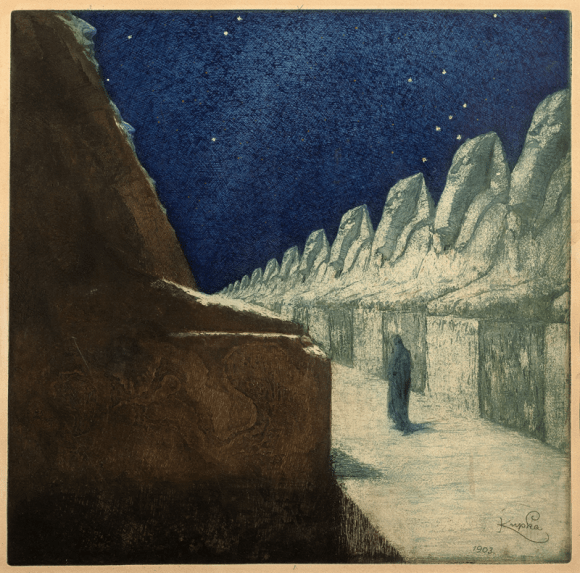
Auf weissen Laken aus Eis bin ich erlöst von meinen Irrwegen befreit von meinem Trotz geheilt von allem Übel Beschworen die Silben meines Namens wie im Schlummer einer Liebenden Vor reine Gegenwart versammelt die Zerstreutheit meiner Sinne In eins gefügt die zerrissenen Zustände des Herzens In eins verbunden die versprengten Kräfte Nichts mehr trübt die Reinheit meiner Anbetung Possen, die ich spielte Verrat, den ich beging Anfang der Welt und Endzeit und jede Wunde, die ich riss Alle Stationen der Isispassion Ri, dschi, Eisenkönig, stirb Endlich das Unsuchbare suchen Todgeweihtes Leiden Hochzeit im Kristallpalast Die wahre und die falsche Zeit Eine Nacht, die sieben Nächte dauert Schwester der Träume und schlafender Gott Bring dich mir zum Opfer Bis goldene Flammenreihen sich In deinem Schädel spalten So werde ich die Tore für dich öffnen Du willst die Wahrheit und du starrst direkt durch sie hindurch Totengräber klagen über Grabesstimmung Köpfe werden rollen in der Commedia
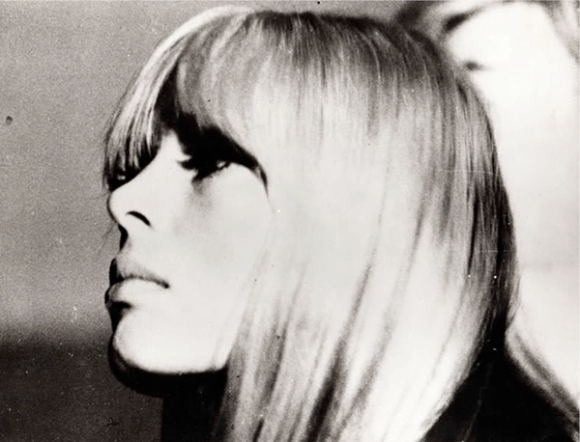
Auf dem Papier eine Factory-Skizze, einer der wenigen Songs, die Lou Reed widerwillig an Nico gab, die er nicht in der Band wollte. Im für 2.500 Dollar und drei Nächte gemieteten Studio spielen Reed auf seiner Gitarre und Sterling Morrison am Bass ein leises Intro. Die ersten Schläge auf Maureen Tuckers umgekippte Bassdrum, dann setzt John Cale ein mit seinem präparierten Piano, das er auf unmenschliche Weise so spielt, als würde ein mechanisches Piano von allein spielen. Normalsterbliche halten das 20 Sekunden durch, Cale hämmert seine Cluster unerbittlich fast sechs Minuten lang, und der Song klingt wie die Prozession in irgendein Schattenreich, Reeds Gitarre im Ostrich-Tuning (alle Saiten auf dieselbe Note gestimmt) spielt Mädchenträume unter dem Blick von Todesengeln. Nico, die einsame Majestät ihrer Stimme, eine Göttin, in der urbanen Unterwelt gelandet. Skizze? Dies ist der Klang einer erhabenen Tragödie.
Andy Warhol: „Her voice, the words, and the sounds The Velvets made all were so magical together.“ (U 34)
David Croland: „She was observant, and people don’t get this! She was at heart a poetess. Your looks do get in the way of your progress if you’re that beautiful, there’s no doubt about it. People become instantly attracted to you and instantly jealous at the same time. […] What I liked most about her, after the initial shock of her extraordinary beauty, was her reserve, her quietness and her way of observing people who were observing her. She was very, very curious and very quiet. She didn’t spin around: people spun around Nico because of her beauty and her mystery. She was sweet. I liked her shyness. I did not find her aloof, I found her shy.“ (JOB 44 ff.)
Danny Fields: „She was so impressive to look at that boys feared her, mainly.“ (JOB 62)
Billy Name: „Nico … rarely spoke. And only when someone spoke to her. She was totally nonflamboyant, nonpretentious, but absolutely magnetically controlling.“ (JOB 79 ff.)
Andy Warhol: „She had this very strange way of speaking. People described her voice as everything from eerie, to bland and smooth, to slow and hollow, to a ‚wind in a drainpipe,‘ to an ‚IBM computer with a Garbo accent.‘ She sounded the same strange way when she sang, too.“ (JOB 90)
John Cale: „Here was this formidable woman, the world’s first supermodel. We were awed by her style.“ (JOB 95)
Playboy Magazine: „… seeing her in her floor-length cloak and listening to her musical, remote talk, one gets the impression of a medieval German Madonna glimpsed in a dream full of images of spring and sunlight.“ (JOB 95)
Lou Reed: „Nico’s the kind of person that you meet and you’re not quite the same afterwards. She has an amazing mind. … If you get into Nico, there’s always the danger that you don’t want to leave.“ (JOB 96)
Andy Warhol: „Nico was weird and untalkative. You’d ask her something and she’d maybe answer you five minutes later. […] She wasn’t the type to get up on a table and dance, the way Edie might; in fact, she’d rather hide under the table than dance on top of it. She was mysterious and European, a real moon goddess type.“ (JOB 102)
Paul Morrissey: „We were always fighting tooth and nail to get poor Nico on. She didn’t fight this sort of thing herself, she was very shy and self-effacing. She would make a little remark. Or then she would giggle a lot. She’d giggle like a girl.“ (JOB 122)
Dave Navarro: „It’s kinda hard to be a fan of Nico and not fall in love with her. You hear this voice and you see her image, the cheekbones, the whole package, it’s strong, unapologetic, haunting, melancholy. As soon as I heard that voice I fell in love with her – I’d marry this girl today.“ (JOB 149)
Una Baines: „‚She just fits into those fears that men have of women who are outside of the norm.“ (JOB 171)
Nico: „I read a lot, I like to read. I prefer Nietzsche of all. Then I like some English poets: William Wordsworth, Lord Tennyson, Lord Byron, Shelley … Shakespeare sometimes, but Tennyson is the best of all. He’s an incredible Romantic, it’s just so beautiful. You find everything there.“ (JOB 254 ff.)
Gerard Malanga, A Short Essay In Appreciation Of Nico, 1967, über Nicos „unapproachable mystique“:
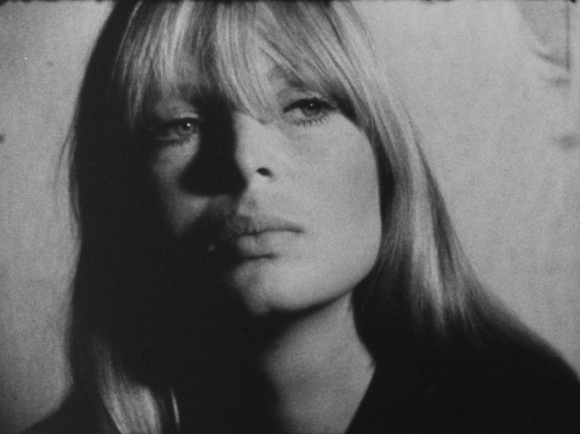
„But the most incongruous is the look of the eyes, focused most frequently on the imperceptible. […] Because of her impact as a three-dimensional whole, Nico would be most effectively represented in sculpture, but not even the most profound artist could capture the strange and unexplainable quality of her eyes. They captivate, but do not beckon; they ignore, but cannot be forgotten; they reflect the inner reality, but leave no clue to its contents. Their expression, or lack of a comprehensible expression, does not relate to the thoroughly comprehensible phenomenon of her beauty. Nico’s eyes seem to guard a great mystery which, hidden in aloofness, they do not want anyone to know exists.“ (U 40)
John Cale: „We were trying to do a Phil Spector thing with as few instruments as possible. On some tracks it worked. „Venus In Furs“ is the best, and „All Tomorrow’s Parties […]“ (U 74)
Paul Morrissey: „Sie war wie Garbo, sie hatte Anziehungskraft, Klasse, Würde. Sie beantwortete sogar Fragen wie die Garbo, umständlich, aber auf witzige Art.“ (AvC 28)
John Cale: „… die Szene aus La Dolce Vita, wo sie in den Daumen ihres Verlobten beißt. So war sie.“ (AvC 49)
Pauledith Soubrier, Halbschwester Alain Delons: „Sie war selber kein deutscher Staatsbürger, sie stammte von irgendeinem kleinen Planeten, das arme Mädchen.“ (AvC 64)
Nico: „Ich bin zum Schauspielern zu scheu. Ich kann nicht so tun, als wäre ich jemand anders, weil ich schon jemand anderes bin.“ (AvC 75)
U = Up-tight – The Velvet Underground Story. By Victor Bockris / Gerard Malanga, London / New York / Sydney / Cologne 1983.
JOB = Jennifer O. Bickerdike: You Are Beautiful And You Are Alone. The Biography of Nico, London 2021.
Geschrieben von Phil Spector, Jeff Barry und Ellie Greenwich. Produzent Phil Spector, Arrangeur Jack Nitzsche.
Phil Spector zahlt Ike Turner 20.000 Dollar dafür, daß er sich vom Aufnahmestudio fernhält.
21 Musiker, 21 background vocalists.
Spector betrachtete diesen Song als sein Meisterwerk. Es heißt, daß Spectors Genie in den Wahnsinn zu driften beginnt, als „River Deep – Mountain High“ nur # 88 in den Billboard Charts erreicht. Als er diesen Song konstruiert, befindet er sich jedenfalls auf der richtigen Seite des Wahnsinns. Spectors Wall of Sound erreicht hier biblische Ausmaße, und am Abend des 7. März 1966 wird Tina Turner in den Gold Star Studios von Los Angeles für immer zum einzigen menschlichen Wesen, das dieser Macht entgegentreten und die Stirn bieten kann. Bis dahin hat Spector sie an diesem Tag schon -zigmal im Zentrum des Orkans stehen lassen:
„I must have sung that 500.000 times. I was drenched with sweat. I had to take my shirt off and stand there in my bra to sing.“
Es dauert mehrere Minuten, bis alle im Studio begreifen, was sie gerade gesehen, gehört und aufgenommen haben.
Vgl. Beethovens Neunte und die Tränen von Jesus.
Celine Dions Version: vgl. Großmutters alte Kajine.
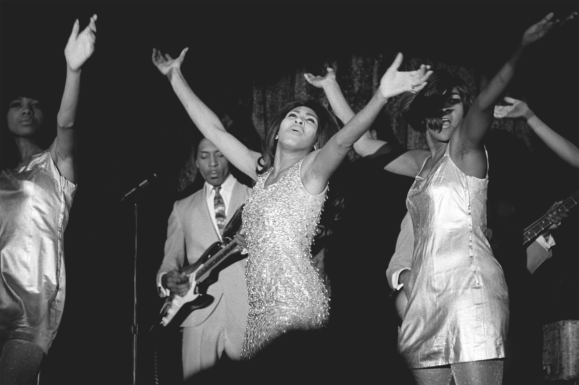
#fuckyeahtheikettes: Ike & Tina Turner & die Ikettes mit einer riot-Version, die am 21. Februar 1971 im Beat-Club das Haus abbrennt. Jederzeit kurz vorm Auseinanderfallen, Aus-der-Kurve-Schlittern und Durchbritzeln, diese Version, und trotzdem schiere Perfektion. Hintenübergefallen 500.000 times beim Schuß auf die Snare und dem move der Ikettes @1:12. Ikettes von links nach rechts: Esther Jones, Vera Hamilton, Jean Brown. fuckyeahjeanbrown. Angriff der Killer-Maracas.
Eisfee, Mantel aus Kristallen, „Versuch nur, zu entkommen“, sagte sie, ihr Lächeln schneidend wie Diamant. Ich folge dem Glanz ihrer Geschmeide, ich bin ihr geschmeidiges Gefolge. Hans Keller verehrt Siouxsie zwischen „The Scream“ und „Join Hands“ in Sounds: „… erotische Blässe, gekonnt ungeordnetes schwarzes Haar, ‚Shiny Boots Of Leather‘, Make-Up, stark konturiert geschminkte feuerrote Lippen (auf das Gesicht geklebt wie der Mund einer Comic-Heldin), Entschiedenheit, Bestimmtheit, Kühle, mitunter Kälte (…)“, und befindet: „Alles an ihrer Erscheinung drückt souveränes Für-sich-stehen aus.“
Souveränes Für-sich-stehen: das galt auch immer für die Band, mit ihrer dramatischen Vermengung von eroticism & mystery. Punk hieß vor allem, darauf zu bestehen, daß alle Wege offen sind, was Siouxsie & The Banshees seit Bromley Contingent-Tagen schon x-mal bewiesen haben, als im Mai 1984 „Dazzle“ erscheint, im Juni dann das Album „Hyaena“, über das HJ Günther in tip schrieb, dies sei Musik „von formal höchstem Organisationsgrad, die ihren besten Trumpf konsequent ausspielt: Die Raffinesse eines unnachahmlich komplexen Klangfarbenreichtums.“
The stars that shine and the stars that shrink: für „Dazzle“ engagieren Siouxsie & The Banshees die Chandos Players, eine 27köpfige Sektion des London Symphony Orchestra, das Streicher-Intro läßt uns Zeit und Raum durchqueren in einem wehmütigen Tagtraum, dann explodiert alles, a psychedelic wall of sound, manisch, majestätisch. Jemand bebilderte „Dazzle“ für ein Video mit Szenen aus Kubricks „2001 – A Space Odyssey“: Jupiter und dahinter die Unendlichkeit. Auch wenn du im Nebel durch die Trümmer gehst, immer sind über dir die Sterne, fern erhoffte Süße und verklärte Nacht. Budgies pounding drums, Robert Smiths Gitarre ein goldenes Ornament im Dunkel, ein Muster, das den ganzen Himmel ausfüllt, Siouxsie singt mit gewohnter Autorität und doch führt sie die Banshees in ein Reich, das ich Pop perfection nennen würde, wenn die Welt und ich unter „Pop“ dasselbe verstünden. Paul Mathur beschrieb im Melody Maker einmal nahezu als Daseinsform der Band: „to wrench beauty from the oddest of places“.
„Dazzle“ ist von grandioser, steinerweichender Schönheit.
„I’ve always been interested in things that hypnotise.“ (Siouxsie)
If I am frightened, then I can hide it If I am crying, I’ll call it laughter If I am haunted, I’ll call it my imaginary friend If I am bleeding, I’ll call it wine
But if you leave me, then I am broken And if I’m broken, then only death remains
If I am drifting, then I can fight it If I am sinking, no one will know it If I am blinded, I’ll have my voices still to guide me If they yet fled away, I’d bless the silence
But if you leave me, then I am broken And if I’m broken, then only death remains
„Thirteen“, geschrieben vom legendären Alex Chilton für das 1972 erschienene Album „#1 Record“ seiner Band Big Star (1), wurde vom Rolling Stone 2011 auf Rang 406 der 500 größten Songs aller Zeiten gesetzt als „one of rock’s most beautiful celebrations of adolescence.“
Won’t you let me walk you home from school? Won’t you let me meet you at the pool? Maybe Friday I can Get tickets for the dance And I’ll take you
Won’t you tell your dad „Get off my back“? Tell him what we said ‚bout „Paint It Black“ Rock ’n‘ Roll is here to stay Come inside now it’s okay And I’ll shake you
Won’t you tell me what you’re thinking of? And would you be an outlaw for my love? If it’s so then let me know If it’s „no“, well, I can go I won’t make you
„Ich war gerade 12 geworden. Unter den ersten 20 Stücken, die ich mit meinem neuen kleinen Grundig C 410 Automatic aus dem Radio aufgefangen hatte, war ‚Street Fighting Man‘. Das Stück hypnotisierte mich. Der Song war so anders als die anderen, so mächtig, daß mir das Herz hämmerte in einem Leib, der Dinge tun wollte, die er noch nie getan hatte. Die letzten 45 Sekunden von ‚Street Fighting Man‘ beendeten meine Kindheit.“
„… daß mir das Herz hämmerte in einem Leib, der Dinge tun wollte, die er noch nie getan hatte“: das ist der Augenblick, in dem „Thirteen“ spielt. Du weißt noch überhaupt nichts, außer, daß alles unvorstellbar anders ist. Du hast die Schrift entziffert. „Rock ’n‘ Roll is here to stay“ bedeutet, daß du das Sweetheart der Klasse entführen wirst mindestens bis hinter die Grenze, weil deine Liebe Gesetzesbrechertum ist, weil du später einen Roman schreiben wirst mit dem Satz „Es gibt andere Formen der Liebe, aber die bedingungslose Liebe fordert zwei Deserteure und die Mentalität eines Gangsterpaares auf der Flucht.“ – „Would you be an outlaw for my love?“
„Thirteen“ ist dieser bittersüße Moment in deinem Leben, der noch hochunschuldig ist und doch sind schon die allerkompliziertesten Gefühle in dir, der fremdartige Liebesschmerz, das Staunen, die Verwunderung, unfaßbar bezaubernde Entdeckungen, Haarsträhnen, die über Mädchenaugen fallen, verschwommene und wilde Träume, der Reiz des Verbotenen, die Furcht und der Mut, Hoffnung und Herzweh, Anfang der Welt, Ende der Welt. Als Alex Chilton gefragt werde, welches Cover von „Thirteen“ er am meisten schätze, sagte er: Garbage.
Garbage. Diese einzigartige Band, schon diese Formation: drei amerikanische Gentlemen, die wie sinistre Anstaltsleiter wirken (was sie im „Bleed Like Me“-Video ja dann auch sind), wie verstörend höfliche Bestattungsunternehmer, Soziophobiker mit Pokerface, suchen eine Sängerin, und sie finden dieses hinreißende Mädchen, das redet wie ein Killer und dabei voller Selbstzweifel steckt. Die erste Begegnung findet just an dem Tag statt, an dem Kurt Cobain tot aufgefunden wird.
Shirley Manson ist Schottin, und wenn sie singt, klingt ihr schottischer Akzent wie irgendwas Cooles, Erotisches und Mysteriöses, nicht wie schottischer Akzent. In den Anfangstagen, da die Band sich findet, schießt dieses Mädchen wie ein Maschinengewehr um sich, und die drei Kavaliere starren auf die Einschußlöcher. Butch Vig, Produzent von Nirvanas „Nevermind“, einigen Smashing Pumpkins-Alben und also mit allen Wassern gewaschen:
„When I first met her, I was terrified of her. She was pretty opinionated and vocal. She says that she was terrified too, but you would never have known it. She had confidence. I couldn’t understand half of what she was saying. A lot of times, she would be singing in the studio and she’d say something and Duke, Steve and I would look at each other and it was (whispers) What did she say?“ (2)
Duke Erikson: „It’s very weird but when I first met Shirley, I felt that I had known her before. Of course I didn’t tell her that. Three or four months later I told her and she said, Yeah, I felt the same way, it’s very bizarre. She has very hard and fast opinions. I wasn’t ready for that part. Initially it was hard to get through the accent. When we were first working together she would say something and I’d have to have her repeat it three times. By that time, she’d just say, Fuck off. I understood that.“ (3)
Ende der 90er, als die Popularität der Band mit „Version 2.0“ ihren Höhepunkt erreicht, gibt es kaum einen Artikel, der nicht davon kündet, daß diese einzigartige Schönheit sich für häßlich hält, für himmelschreiend uncool dazu, und daß sie als smartass-Entwicklerin von Strategien im Gewirr ihrer hochkomplexen Persönlichkeit ein paar Dinge doch erst als letzte versteht.
„Garbage’s idolised singer thinks she’s ugly while the ‚men‘ in the band act like delinquent teenagers on tour. (…) She’s one of the world’s most beautiful women, but finds her appearance physically repulsive. She cut herself as a teenager. She is preoccupied with her ‚ugliness‘ but feels embarrassed when she reads herself talking about self-loathing. Her father gets distressed when his daughter says she’s ugly, so she’s gonna start lying. But nothing – no psychiatrist or the reassurance of her bandmates – will convince this most photographed of women that she looks anything but ‚a total arse‘. She’s the most intriguing, intelligent interviewee this journalist has ever encountered and yet apologises for being ‚inarticulate‘. (…)
It’s weird how, for someone steeped in insecurity, Shirley extols such super feminine confidence. ‚My two sisters were beautiful and my two best friends were beautiful,‘ she explains. ‚I was always the ugly one. So I became an exhibitionist and took pleasure in repulsing men. I learned to get as much attention from being disgusting as the girls got from being beautiful. I grew up fighting against what was expected of me and people mistake it as confidence.'“ (4)
„‚Everyone puts shades on and looks as cool as fuck,‘ wails Shirley. ‚I put shades on and look like an oaf. It took us three years to find me a pair of shades, and when we finally do, I lose them.‘ (…) ‚I am so uncool, it’s unbelievable,‘ grimaces Shirley. ‚I spend my whole life as a geek. It’s so unfair.‘
This, as anyone who followed the recent press blanket-bombing will know, is something of a regular complaint in Shirley’s interviews. A million people, looking at the accompanying pictures of a dazzling rock überfrau in miniskirt and stack-heeled boots. growled, ‚Girl, get a mirror,‘ with a look of disbelief on their not-so-pretty faces. (…)
‚I’ve come to realise that the performance is a confirmation, comes from the perverse desire to feel less ugly – and, damn straight, when I’m on-stage I don’t feel ugly.'“ (5)
„She often talks about music being her salvation when she was a depressed, suicidal teenager, and now this notoriously insecure and self-depricating woman is an idol herself. (…)
„I am not a sexy woman, I’m not beautiful, I’m not a sex kitten, I don’t flirt with people, yet I’ve been tagged more of sex symbol than women who truly are and that’s solely because I don’t reveal too much: people are curious.“ (6)
„A black cloud of low self-esteem, apparent to anyone who spends more than a few minutes in her company, seems to shadow the Garbage frontwoman’s every step (…) Shirley Manson suffered terrible insecurities as a youth, believing herself – the middle sister of three – to be the pug ugly runt of the litter. (…) ‚I don’t think of myself as particularly attractive. I don’t know why. If somebody out there can tell me why, please, I’m willing to listen. Or give me some pills and fix it. But if you can’t give me a pill to fix it, then so be it. Leave it be. It’s just something I have to deal with and that’s tough luck.'“ (7)
Garbage covern „Thirteen“, weil es (I) ein großer Song ist. Und natürlich ist es (II) reizvoll, wie der Text, wenn Shirley Manson ihn singt, aus der Perspektive des Mädchens eine andere Dynamik bekommt. Vielleicht bedeutet Perspektive des Mädchens aber noch etwas anderes. Vielleicht ist (III) Shirley Manson für immer das Mädchen, das diese Worte hört. All das, was man in diesen Artikeln liest, all die Widersprüchlichkeiten, die man in diesem Geist, the most intriguing & intelligent, und in dieser Schönheit ahnt, mit der man durch den Wilden Westen ziehen will, bis ans Ende der Welt und bis ans Ende der Zeit, all das ist in dieser Stimme, die so verführerisch und hypnotisch sinnlich klingt und zugleich ist in ihr diese Mädchenpanik, die Zerbrechlichkeit, die Angst, der Welt nicht gewachsen zu sein, die Unsicherheit, die Erschöpfung, die Hoffnung, keine Rolle mehr spielen zu müssen, und darum bleibt diese Szene so bedeutsam, darum ist die Musik von „Thirteen“ so traumgleich. Und wie traumgleich. Die elektrischen Gitarren von Duke Erikson und Steve Marker weben ein Motiv so unendlich zart, versponnen, weltentrückt, zusammen mit den darunter schimmernden elektronischen Effekten geradezu mystisch anmutend, im Break dann gesprochene (französische) Sequenzen wie Traumfetzen, unerklärliche Übertragungen, das Gefühl, mit einer anderen Welt verbunden zu sein, „Alle Leidenschaft ist eine Bezauberung. Ein reizendes Mädchen eine reellere Zauberin, als man glaubt“ (Novalis), darum ist der Äther beteiligt, der Nachhauseweg ist Himmelssturm. Die Musik beschwört diesen Moment der Reinheit, der so anstrengungslos schien, und Shirley Manson ist das Mädchen in genau jenem Augenblick, da sie versteht, daß sie eine reelle Zauberin ist.
(1) Bei den Songwriting-Credits gingen Alex Chilton / Chris Bell vor wie Lennon / McCartney oder Jagger / Richards, tatsächlich brachte aber Chilton den Song zu den Aufnahmen ins Studio.
(2) Shirley Manson Opens Her Mouth, Q Magazine März 1999
(3) Shirley Manson Opens Her Mouth, Q Magazine März 1999
(4) Three Men And A Babe, Melody Maker, May 1998
(5) I am so uncool, it’s unbelievable, Victoria Segal NME July 11,1998
(6) The Minx, January 1999
(7) Shirley Manson Opens Her Mouth, Q Magazine März 1999
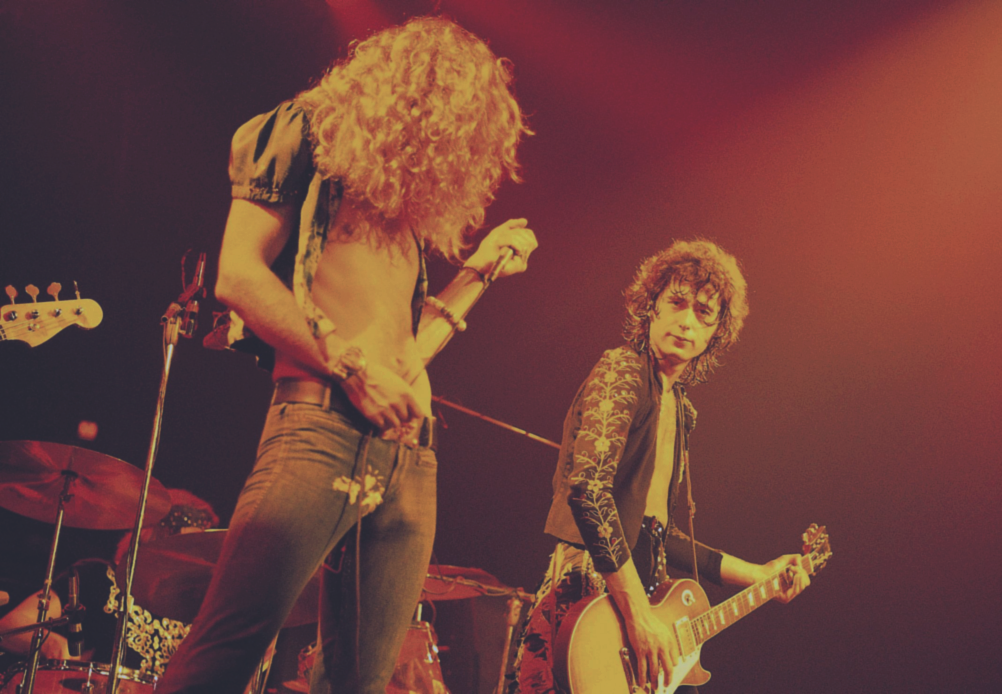
Als ich „Physical Graffiti“ nach Hause getragen hatte und die Platte auf meinem Bett zum ersten Mal hörte, gab es diesen Moment, nach einer halben Minute „Kashmir“, da ich mich ungläubig erhob und dann einfach nur im Raum stand und mich nicht rührte, in Trance, 8 Minuten lang. Mein Zimmer lag plötzlich an einem unbekannten Ort. Ich war 16, und was Jimmy Page, Robert Plant, John Paul Jones und John Bonham vollbrachten in diesen hypnotischen, majestätischen Minuten auf dem Weg in ein zeitloses Reich, hatte unwiderrufliche Auswirkungen auf meine Neurochemie. Dieser Song gehört zu den größten Errungenschaften der Menschheit. In 100 000 Jahren wird dies der rätselhafte Monolith sein, den eine andere Zivilisation entdeckt.

























 Das Cabinet des Christian Erdmann